America once built factories, railroads, ports, and power plants to fuel the Industrial Revolution. And now…
We are building data centers.
Welcome to the Digital Age — where information has become the new oil, Artificial Intelligence is the new factory system, and giant computer warehouses are becoming the industrial parks of the future.
The problem is…
Most residents have no idea what a data center really is until one is proposed near their neighborhood.
Then suddenly people start asking questions:
- Why do these facilities need so much land?
- Why do they use so much water?
- Will my electric bill go up?
- Are they noisy?
- Why is local government giving them tax incentives?
- And why are they suddenly popping up all over Florida?
Let’s break it down in plain English.
First — What IS a Data Center?
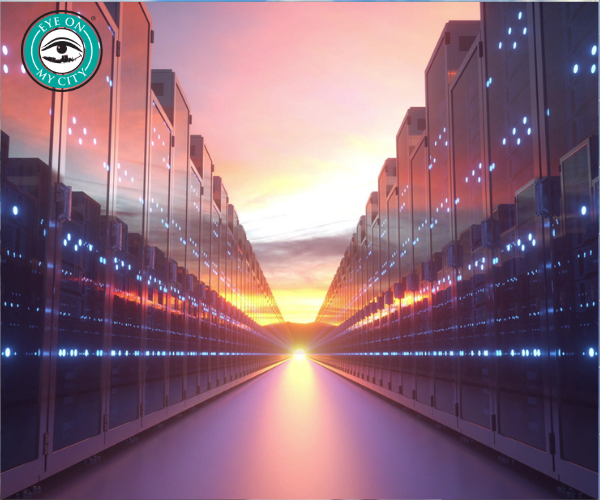
Think of a data center as a giant warehouse packed with thousands of powerful computers running 24 hours a day, 7 days a week.
These buildings power:
- Artificial Intelligence (AI)
- Google searches
- Cloud storage
- Social media
- Banking systems
- Streaming services
- Government databases
- Online shopping
- Medical records
- and now… AI chat systems like ChatGPT.
Every time you:
- stream a movie,
- post a picture,
- use GPS,
- ask AI a question,
- or store something “in the cloud,”
a data center somewhere is doing the work.
Why Are So Many Being Built Right Now?
Because AI changed everything.
Artificial Intelligence requires an unbelievable amount of computing power compared to traditional internet activity.
One AI request can consume many times more energy than a simple web search.
That means companies like Google, Microsoft, Amazon, and Meta are now racing to build more infrastructure as quickly as possible.
And infrastructure means:
- land,
- electricity,
- cooling systems,
- water,
- fiber lines,
- substations,
- and giant industrial buildings.
In other words:
the Digital Age still requires physical infrastructure.
Lots of it.
Why Residents Are Concerned
This is where the conversation becomes local.
Because these facilities are not little office buildings tucked quietly into a business park.
Modern data centers can be enormous industrial campuses.
And residents are starting to notice the impact.
Electricity: The Biggest Issue
Data centers consume massive amounts of power.
Some use as much electricity as a small city.
That raises obvious concerns:
- Will power bills increase?
- Can our electric grid handle it?
- Will more substations and transmission lines be needed?
- What happens during hurricane season or peak summer demand?
As AI grows, electricity demand is expected to skyrocket nationwide.
Water Usage Surprises Many People
Here’s what many residents do not realize:
Those giant computer systems create tremendous heat.
To keep them from overheating, many data centers use industrial cooling systems — and many of those systems require large amounts of water.
Residents naturally begin asking:
- Will this affect our aquifer?
- What about drought conditions?
- Why should computer facilities consume millions of gallons of water?
In Florida, where water management is already politically sensitive, these questions are only getting louder.
Then There’s the Noise
Many people picture quiet computer rooms.
Reality is different.
Large facilities often contain:
- industrial cooling fans,
- generators,
- transformers,
- ventilation systems,
- and mechanical equipment operating around the clock.
Residents living nearby sometimes complain about constant humming or industrial noise.
Land Use Battles Are Beginning
Data centers also require:
- large pieces of land,
- heavy utility infrastructure,
- security fencing,
- backup systems,
- and industrial-style layouts.
That creates tension in growing communities where residents moved for peace, nature, or neighborhood character — not industrial development.
Questions quickly follow:
- Are property values affected?
- Why place these near residential areas?
- Is this smart growth?
- Who benefits most?
The Taxpayer Debate
Local governments often compete aggressively for data centers by offering tax incentives and fast-track approvals.
Supporters say the projects:
- grow the tax base,
- create construction jobs,
- and position communities for future technology growth.
Critics point out many data centers employ relatively few permanent workers after construction is completed.
So residents ask:
- Are taxpayers subsidizing billion-dollar tech companies?
- Will utility upgrades eventually land on homeowners?
- Is the long-term benefit worth the tradeoff?
Why Florida Is Suddenly in the Middle of This
Florida is attractive to technology companies because of:
- population growth,
- business-friendly policies,
- fiber infrastructure,
- available land,
- and favorable tax structure.
But Florida also faces:
- water supply concerns,
- hurricane risks,
- rapid development pressures,
- and infrastructure strain already.
Which means this debate is only beginning.
The Bigger Picture
The Industrial Revolution transformed America with factories and railroads.
The Digital Revolution is transforming America with data centers and AI infrastructure.
The difference is this:
Most people can see a factory smokestack.
Few people realize the AI systems they use every day require giant industrial facilities consuming land, electricity, and water somewhere behind the scenes.
But communities across Florida are starting to find out.
And many residents are now asking the biggest question of all:
How much of the Digital Age do we want built in our own backyard and what other unintended consequences will appear once they are built?