
Here’s the buried headline: President Trump just speed-ran a major war. As far as I can tell, the time from launch to first cease-fire is a modern record. After a dramatic weekend buildup wherein the President set a dramatic 8pm deadline, threatened to “wipe out” Iran’s civilization standing next to a rabbit mascot, dropped an F-bomb, and after B-52s were launched and on their way, Iran came to the table at the last minute. The Wall Street Journal reported, “Iran War News Live Updates: Trump Agrees to Two-Week Cease-Fire With Iran if Hormuz Re-Opened.”
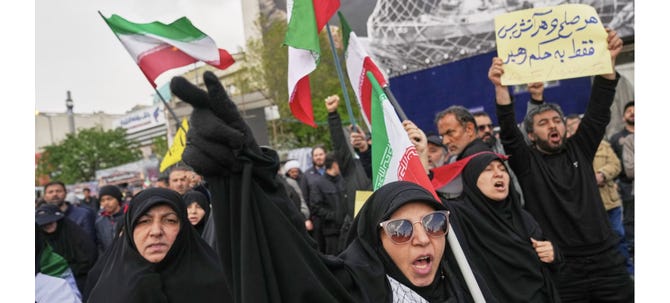
Even while corporate media was still reporting that Iran defied the deadline, and CNN ran a humiliating fake piece about Iran winning, oil was already falling. Meaning, the markets knew before the media could bring itself to accept the truth. They were secretly hoping Trump would bomb Iran back to the Stone Age.
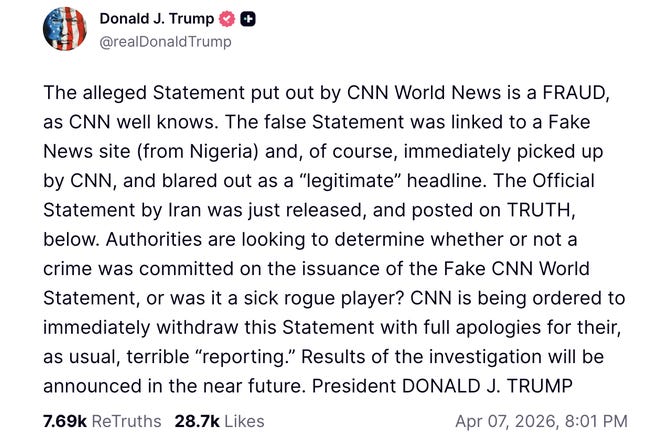
Iranian ally Pakistan brokered the two-week ceasefire. At 7:58 PM —two minutes before the deadline— Pakistan’s Prime Minister Sharif called the President of the United States on behalf of Iran with a proposed framework. The important point: the Strait of Hormuz is open. Oil markets immediately fell by $18.43/barrel— the biggest one-day drop since the 1991 Gulf War. Iran’s Supreme National Security Council declared, “The enemy, in its cowardly, illegal, and criminal war against the Iranian nation, has suffered an undeniable, historical, and crushing defeat.”
In strongman-speak, that translates to, okay, you got us this time. To my knowledge, it was the first time in history that the word ‘crushing’ was used to describe a ceasefire somebody asked their neighbor to broker two minutes before the deadline.
39 days from start to ceasefire. For comparison, Afghanistan required twenty years to reach its first ceasefire, the Doha Accords. Ukraine has been running for going on five years with no meaningful ceasefire. This is an astonishing historic record that should be in every single headline this morning, but of course, Trump Derangement takes its terrible cognitive toll, and honestly, I think they just can’t see it.
But that’s not even the most impressive part. Want to see something reallycool?
🚀 Cast your mind back to last Spring, when Trump, fresh off the Inauguration, was oddly touring the Middle East making deals. Remember that? There were two parts. First, in 2025, he made individual trade deals with most major Middle Eastern countries. At the beginning of this year —after ending the ugly Israel-Hamas war— he formed the Board of Peace and funded it with $10 billion dollars.
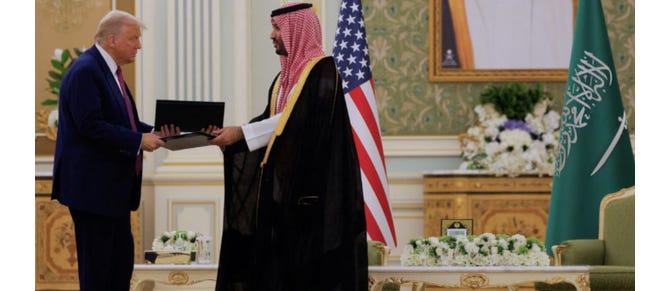
Let’s walk through the amazing timeline. In May, 2025, Trump barnstormed the Middle East on a whirlwind 4-day tour, making economic deals, investment pledges, and bilateral agreements.
In January, 2026, President Trump launched his Board of Peace with a $1 billion buy-in for extended membership. Notice who joined: Saudi Arabia, UAE, Qatar, Pakistan, Turkey, Egypt, Jordan, Indonesia, Bahrain, Kuwait, Morocco and others; making 25+ countries total. Now notice who did not join: Iran. (“Allies” like UK, France, and Canada all dragged their feet.) The US pledged $10 billion to run it, with $1.25 billion already transferred from the State Department.
The money is managed by private US interests (rumored to be managed by Jared Kushner’s Affinity Partners). In other words, it’s not managed by the UN, the IMF, or the World Bank. Or by the Middle Eastern countries.
Here’s what all this means: long before Trump launched Operation Epic Fury, he stitched up all of Iran’s neighbors, entangling them in a web of economic and investment deals, trade agreements, and, to top it all off, their memberships in the Board of Peace. If you ever wondered why every single Middle Eastern country aligned with the US in the conflict against Iran— thisis why.
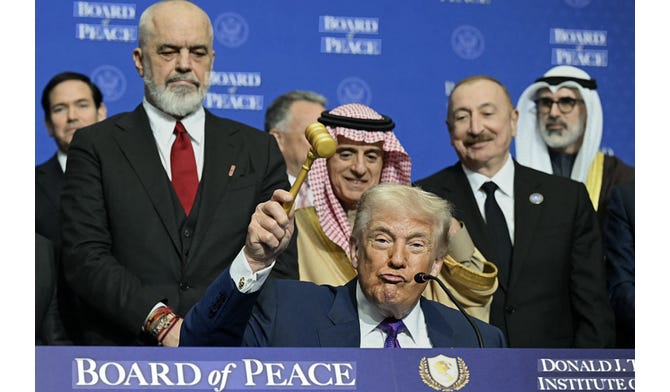
He trapped them. Every major Middle Eastern economy is now financially entangled with the US through the Board of Peace alone. Saudi Arabia, UAE, Qatar —Iran’s neighbors and oil competitors— are on the board. Turkey —Iran’s northern neighbor— is on the board. Pakistan —Iran’s eastern neighbor who just helped broker the cease-fire— is on the board.
All these countries now have billions invested in a US-led framework that Iran is specifically excluded from. It’s like Trump built an exclusive country club that doesn’t admit Iranians. He got all Iran’s buddies signed up with long-term club contracts. Then he filed for foreclosure against Iran. What can the rest of them do? Give up their memberships? Break the contract?
When Trump launched his State Department-less foreign policy, the foreign policy establishment and its overpaid experts sneered until their faces cracked. Trump’s transactional real-estate skills don’t apply to diplomacy, ha ha. He doesn’t understand how complicated geopolitics is. He should be asking us.
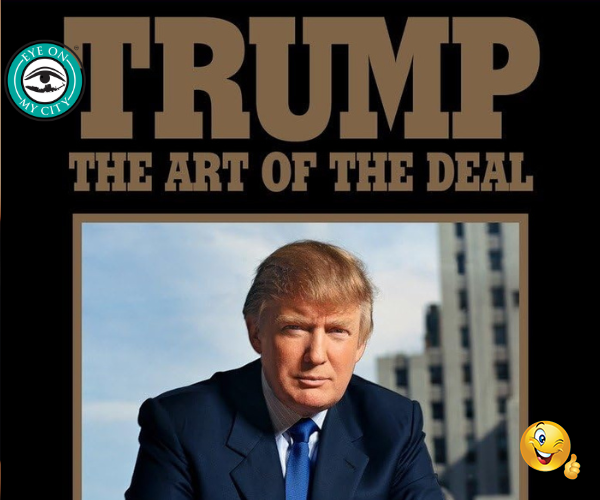
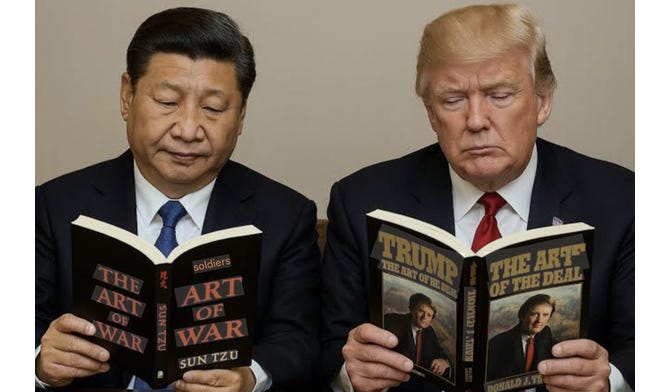
Well, behold: the Art of the Deal, applied to geopolitics. Sorry, experts. Sorry, diplomats. Trump built the alliance structure first, a transactional structure that committed everyone financially, isolated the target, and then he squeezed. By the time the military phase began, every single one of Iran’s neighbors was economically incentivized to help Trump end the war. And it worked.
The same foreign policy establishment that smugly assured everyone that Trump couldn’t do diplomacy without the State Department also told us that arming Ukraine would end the war quickly, that withdrawing from Afghanistan would be orderly, that Iraq had weapons of mass destruction, and that the Iran nuclear deal was working. Their ‘track record’ is more like a rap sheet.
Trump’s “transactional real-estate approach” —which the experts and trad-media relentlessly mocked as unsophisticated— produced a $10 billion multilateral peace framework, a 25-nation coalition built without the UN, a ceasefire in 39 days, and Pakistan volunteering as mediator. The State Department’s “sophisticated” approach, on the other hand, only produced pallets of cash flown to Tehran on an unmarked plane in the middle of the night.
The kicker is that the experts’ criticism was always projection. But they are the ones who don’t understand how complicated geopolitics is. They think complexity requires more complexity. Nothing is straightforward. To the swamp, everything is wheels-within-wheels, secret deals and clandestine ops, and color revolutions over decades through gay pride and trans puppet shows.
Trump understands that complexity requires simplicity. Clear incentives, clear consequences, clear deadlines. He’s not “unsophisticated.” He’s a closer.
🚀 Like everyone sane, I’m grateful the Iranians wisely decided to de-escalate, because it could have been ugly. But I’m also grateful because I couldn’t finish an important thought in yesterday’s post, but now I can. Let’s wrap up Trump’s ghastly Truth Social Easter post.
Here’s what I didn’t say yesterday, because I did not want to undermine the President’s strategy. I gave you the pieces, but I didn’t highlight the point. I told you that Trump’s F-bomb post was appalling and offensive, and that was what he intended. But why? Why be ugly on purpose?
Like everything Trump tweets, it was for a reason.
Even the Times’s TDS-inflicted experts agree that Iran cannot win militarily. It’s just a matter of time. So the only way Iran can ‘win’ is politically. Iran’s strategy is to wait out Trump’s approval rating. That’s their whole plan. They plan to hold out until Trump’s own supporters make him stop. Treasonous corporate media is enthusiastically helping Iran.
Trump’s offensive tweet was meant to convey one simple message to the mullahs: I don’t care about the politics. I’m moving forward anyway. Don’t test me.
If that explanation still leaves you uncomfortable with the President’s brash tactics, I refer you to Matt Taibbi’s wonderful Substack post, titled, “Trump’s F-Bomb on Iran Joins America’s Rollicking History of Presidential Profanity.” Sub-headline: “Surprisingly, there’s plenty of precedent for Trump’s Easter tirade.”
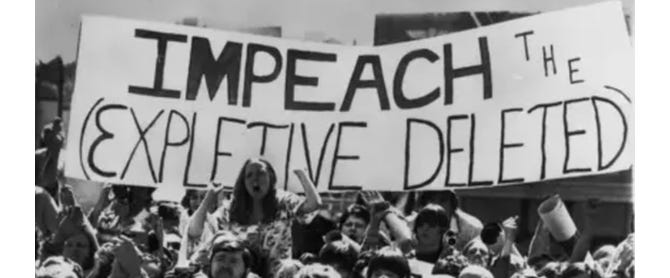
Matt rounded up other eye-popping and undignified presidential offenses, like when the New York Times reported that, harangued by reporters about the Vietnam War, President Lyndon Johnson unzipped his trousers and whipped out the little president, exclaiming, “This is why!” (Imagine the hysteria if Trump tried something like that in 2026.)
Another time, LBJ dropped trou and publicly defecated on the side of a dusty Texas road while traveling with Times reporter Tom Wicker, as a stinky and unmistakable commentary on Tom’s reporting. (As it happens, I’ve often considered, but reluctantly rejected, similar performative comments about the Paper of Record.)
On Tuesday, the Times breathlessly reported Trump is recklessly reveling in threats of war crimes! On Wednesday, the Times sullenly reported Iran brokers a cease-fire. It took one day. They still don’t get it. TAW.
There were a couple other delicious nuggets buried at the bottom of the war news bag yesterday.
🚀 Yesterday, Defense News (and only Defense News), reported “Iran’s other would-be WMD program lies in ruins following strikes by Israel and the US.”
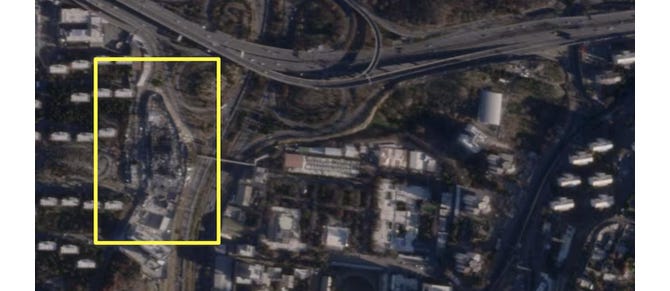
“Iranian facilities affiliated with chemical and biological weapons research have been hit by the United States and Israel without much fanfare,” Defense News reported, “as satellite imagery and the analysis of images shared on social media show.”
‘Without much fanfare’ is one way of putting it. Ignored by trad-media would be another. I bet you didn’t even know Iran had a bio-weapons research program.
On April 1st and 2nd, US and Israeli forces ‘reduced’ the Pasteur Institute of Iran, the Darou Pakhsh Pharmaceutical Manufacturing Company, the headquarters of the Organization of Defensive Innovation and Research, and the Malek Ashtar University of Technology. (Yes, they named their bio-weapons lab after Pasteur, the father of modern vaccines; ironic.) Defense News admitted that the target selection was consistent with long-standing reports about Iran’s chemical and biological programs.
Of course, Defense News downplayed it, concluding that because (1) the media coverage was muted (‘without fanfare’), and (2) there was no warning to the public about potential spills or leaks, Iran’s programs must not have been well developed. That ignores the more likely possibility that allied officials decided they could eliminate Iran’s programs without creating a public hazard. Once again, we see media treating the Administration’s understandable lack of sharing its tactics as proof that a risk doesn’t exist.
It also ignores the bigger point that, regardless how well or poorly developed Iran’s WMD programs were, they are now buried under rubble. Most people, whatever their politics, would accept that eliminating even a potentialbioweapons capability in the hands of a hostile regime is not a luxury or a talking point, but a core duty of any responsible government, especially if you’re already in the neighborhood with a few extra bunker-busters anyway.
It’s also not exactly shocking that the Pentagon isn’t trumpeting chemical and biological strikes from the rooftops. After the ignominious collapse of Operation Iraqi Freedom’s “weapons of mass destruction” narrative, nobody in Washington is eager to replay the WMD sales pitch, even when the targets really are research facilities like Iran’s Louis Pasteur Institute and Malek Ashtar.
Somebody at the Pentagon has been doing their homework.