Yesterday the corporate media largely ignored, as part of a week-long Bible-reading project, President Trump reading 2 Chronicles 7:11-22 (nearly 3 minutes long). The AP covered it as straight news, headlined, “‘If my people’: Here’s why the Bible passage Trump read aloud is so potent and polarizing.” The passage calls for national repentance, is often read at rallies and prayer breakfasts, and is downright frightening to progressive journalists.
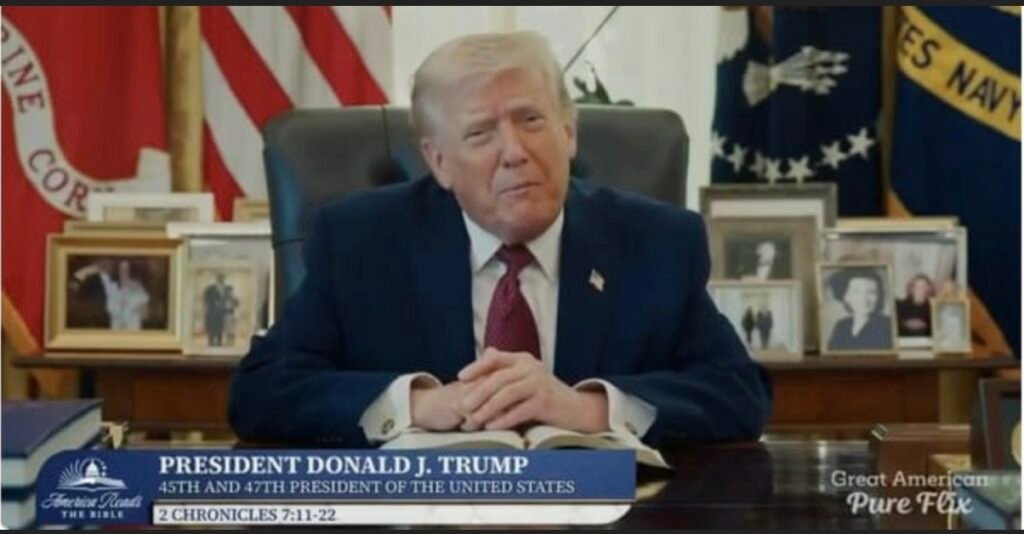
CLIP: President Trump reads from the Bible in the Oval Office (2:39).
The 2 Chronicles passage the President read includes these well-known words: “If my people, which are called by my name, shall humble themselves, and pray, and seek my face, and turn from their wicked ways; then will I hear from heaven, and will forgive their sin, and will heal their land.”
During the week-long reading event, timed to celebrate the 250th anniversary of US independence, hundreds of lay people, prominent conservative figures, politicians, and members of the administration are also reading passages, including War Secretary Hegseth and Secretary of State Marco Rubio. It will continue until they’ve read the whole Bible, front to back.
The AP was largely alarmed by this. It invoked the terrifying specter of Christian nationalism, whatever that is, while glancing around nervously for signs of imminent lightning strikes. So far as I can tell, there is no agreed-upon definition of “Christian nationalism,” and in Corporate Media it usually just means “whenever Christians talk about the Bible outside of church.”
So, in that sense, I suppose the AP was right. Make of this historic development what you will. But consider it in light of the next story.
🔥🔥🔥
In another under-reported story, also about “Christian Nationalism” (if I understand the terminology), on Tuesday PBS reported, “Appeals court rules Texas can require public schools to display Ten Commandments in class.” The ACLU said it was “extremely disappointed” in the Fifth Circuit’s 9-7 decision overruling two lower court decisions, which means it was great news for everybody else.
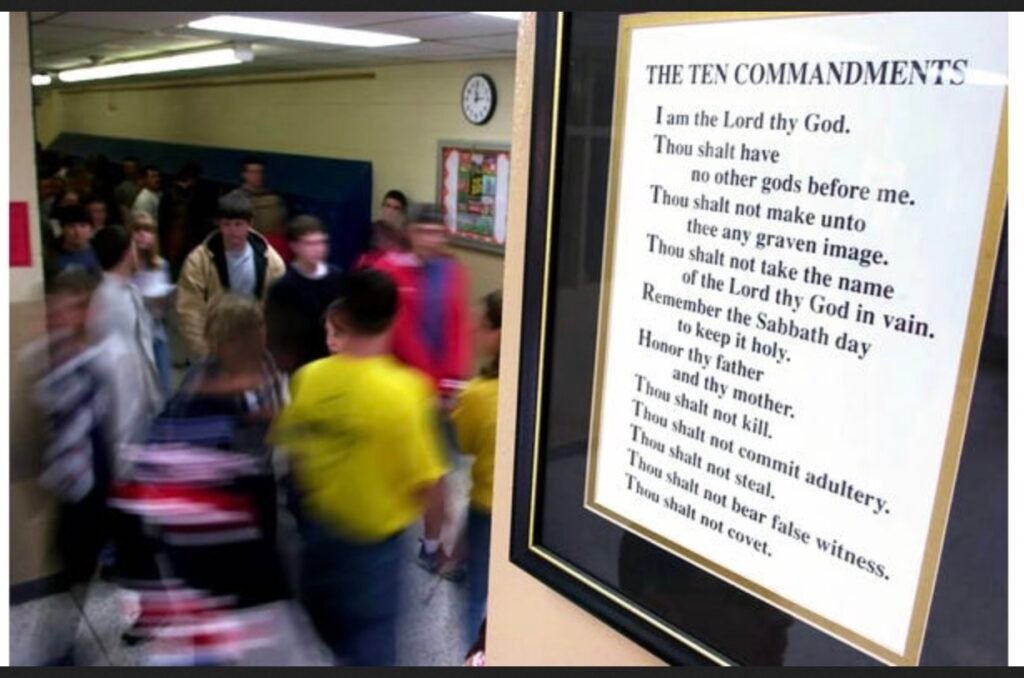
Under a new 2025 law, on September 1st, Texas’s public schools would have been required to hang up Ten Commandments posters. But in two separate cases, federal judges promptly enjoined the requirement, of course, both in Texas and in Louisiana (under a similar new law). It left schools split. Some schools went ahead anyway using private funds. Others breathed sighs of relief, because the last thing they need is the words “Thou Shall Not Commit Adultery” staring down their necks every minute of the day and constantly judging them.
I’m not exaggerating. Here’s how one NBC story reported a teacher’s response to the Ten Commandments. She said the Decalogue means “zero” to her students, who apparently prefer more relatable commandments like “just be kind” and “don’t steal our art supplies”:
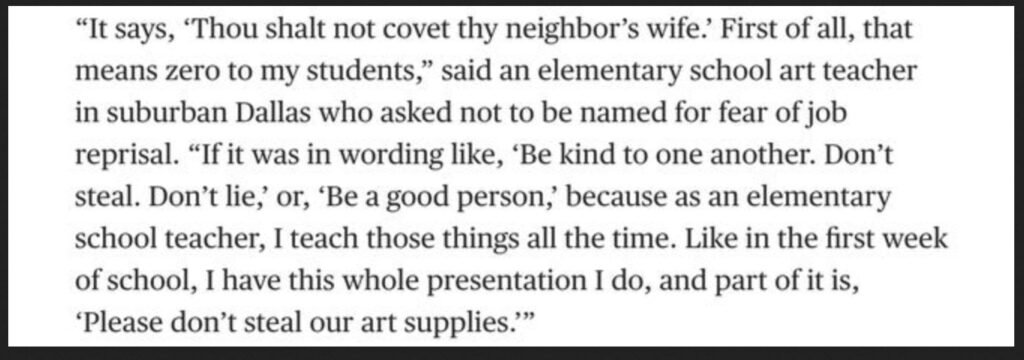
We obviously have a long way to go. Encouraging kids to “Be a good person” is not especially helpful without instructions as to what a “good person” does. Which is exactly what the Ten Commandments provide. Educate the educators.
Texas’s law does not punish or sanction teachers who refuse to comply. Judge Stuart Kyle Duncan wrote for the majority and explained that hanging Ten Commandment posters does not establish any religion. “The Texas law does not tell churches or synagogues or mosques what to believe or how to worship or whom to employ as priests, rabbis, or imams,” Judge Duncan wrote. “It punishes no one who rejects the Ten Commandments, no matter the reason.”
Nevertheless, the ACLU vowed to appeal to the United States Supreme Court— where it will likely lose. In 2022, this same Supreme Court in Kennedy v. Bremerton School District overturned a 50-year-old “Lemon” test (Lemon is the name of a previous ruling, not the Thirty Rock character) and said courts should instead interpret the Establishment Clause “by reference to historical practices and understandings.”
Under the new Kennedy rule, lower courts are told to ask whether a particular practice fits within the nation’s historical traditions, and whether it involves actual coercion. Not just whether some hypothetical “reasonable observer” might be ‘offended,’ or might see it as endorsement. In other words, mere exposure or offense is no longer enough to show an Establishment Clause violation under the Kennedy framework.
Commentators interpret Kennedy as a “final nail in the coffin,” not only for Lemon, but also for “offended observer” standing. This means people who just feel excluded by a religious display can no longer get into federal court at all. Plaintiffs must now show a particular injury beyond their emotional reaction or their feelings of exclusion. If a particular practice —like hanging the Ten Commandments in schools— has been part of America’s historic traditions, then it is now fair play.
America is rapidly returning to its historic Judeo-Christian heritage after a fifty-year dalliance with secular humanism. Sorry, humanists.