
Sometimes a press release lands in your inbox and you think: Well, this is worth watching.
That happened this week when Florida Attorney General James Uthmeier announced a lawsuit against Eli Lilly, Novo Nordisk and Sanofi, along with the pharmacy benefit managers CVS Caremark, Express Scripts and OptumRx and several rebate aggregators.
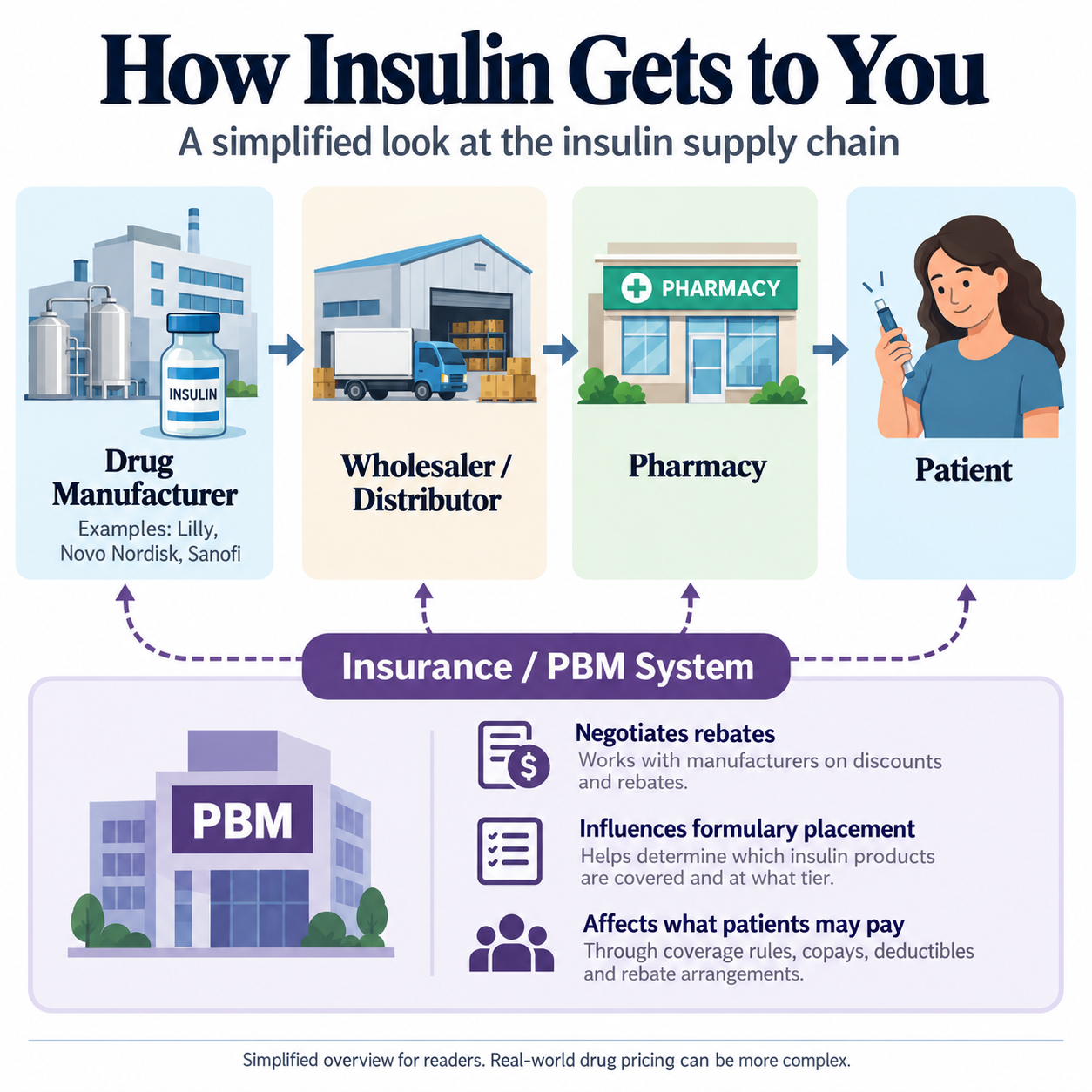
Florida’s allegation is pretty simple, even if the prescription drug business is anything but simple: manufacturers raised the published price of insulin and related diabetes drugs, while rebates and fees flowed back through PBMs in exchange for preferred placement on drug formularies.
And the numbers are eye-opening.
Uthmeier pointed to earlier testimony from a Lilly executive involving a vial of Humalog with a $280 list price. According to that testimony, about $210 — roughly 75% — went back through rebates or discounts to PBMs.
So naturally, my question was:
Where in the world is all that money going?
Because when a patient is standing at the pharmacy counter, they are not thinking about formularies, rebate aggregators, PBMs, vertical integration or negotiated net prices.
They are thinking:
How much is this medicine going to cost me?
And for people who need insulin to live, that is not an academic question.
This is where I need to give a big kudos to Eye’s medical writer, Dr. James O’Leary.
Jim has been digging into PBMs and prescription drug pricing for quite some time — long before this latest lawsuit.
Back in June, Eye published his article “Florida AG investigates CVS over pharmacy practices.”
Jim explained something most people still do not understand: PBMs are the middlemen managing prescription drug benefits. They can influence what drugs are covered, where patients fill prescriptions, what pharmacies are reimbursed and how much patients ultimately pay.
But here is another piece of this puzzle that Jim believes people need to understand.
The three biggest PBMs are attached to three enormous healthcare corporations: CVS Caremark is part of CVS Health, Express Scripts is part of The Cigna Group, and OptumRx is owned by UnitedHealth Group. Together, those three PBMs handled about 79% of U.S. prescription drug claims in 2023.
These are massive publicly traded healthcare companies with significant resources and government-affairs operations.
Jim’s concern is that this makes meaningful PBM reform in Washington particularly difficult. Congress isn’t simply dealing with a collection of obscure prescription-drug middlemen. It is dealing with some of the largest healthcare corporations in America — companies that actively lobby on healthcare and public policy issues.
That certainly helps explain why this issue can be so hard for the average patient to follow.
And CVS is an especially interesting example because CVS Health owns CVS Caremark, CVS pharmacies and Aetna. Different businesses under the same corporate roof can therefore participate at several points in the healthcare and prescription-drug system.
Jim has previously laid out concerns being investigated around things such as patient steering, spread pricing, unequal reimbursements, clawbacks and restrictive contracts that can put pressure on independent pharmacies.
Then in December, he wrote another piece for Eye called “Eli Lilly fights back!”
In that story, Jim walked readers through how formularies work and how PBMs can influence whether a particular drug gets favorable placement. He also wrote about Eli Lilly moving some products toward direct-to-consumer sales through LillyDirect — another sign that the old drug-pricing structure is being challenged from more than one direction.
There is another fact worth knowing today.
Lilly itself says $35 is the most that most people who rely on Lilly insulin should have to pay for a monthly prescription. The company has a $35-per-month insulin program for eligible patients, including people with commercial insurance and people paying cash, although terms and eligibility requirements apply.
Think about that for a minute.
We are discussing list prices that can run into the hundreds of dollars while the manufacturer itself is telling patients there are programs designed to bring their monthly cost down to $35.
If you use Lilly insulin and are paying substantially more than that, it is certainly worth asking your pharmacist, insurer or Lilly what options are available.
Once again, the question becomes:
How did we build a system this complicated just to get medicine from the manufacturer to the patient?
When Jim saw Uthmeier’s latest action, he had a lot more to say than simply, “Good job.”
“State Attorneys General have enormous discretion over which areas they choose to focus on. James Uthmeier is taking on some of the largest healthcare corporations — companies that we believe are needlessly raising the cost of medications for everybody in Florida.
Even if you don’t see that cost directly at the pharmacy counter, it shows up in increased health insurance premiums. These overcharges affect all of us and make healthcare less affordable.” — Dr. James O’Leary, Eye on Jacksonville Medical Writer
That last part is important.
You may never buy a vial of insulin.
You may never take Ozempic, Trulicity or one of the other drugs involved in this case.
But if higher drug costs are ultimately being absorbed by insurance companies, employers and government health programs, those costs don’t simply disappear.
They can eventually make their way back to all of us through premiums, taxes and the overall cost of healthcare.
That is why this lawsuit deserves attention beyond the diabetic community.
And frankly, this is exactly why we value having Dr. Jim writing for Eye.
He takes some of the most complicated issues in healthcare and asks the same question the rest of us are asking:
What does this actually mean for the patient — and for the rest of us paying the bills?
The lawsuit also goes beyond insulin. It includes diabetes and GLP-1 medications such as Ozempic, Trulicity, Victoza and Soliqua and seeks damages, civil penalties and other relief.
Now, the important part: these are allegations in a lawsuit. The drug manufacturers, PBMs and other defendants will have their opportunity to respond, and the court will ultimately determine whether Florida’s allegations are proven.
But Uthmeier’s lawsuit puts a spotlight on something patients have been asking for years:
Why is this system so complicated, where is all the money going, and why does the patient so often seem to be the last person in the room to know the real price?
Eye has been watching this issue for a while, thanks in large part to Dr. Jim O’Leary’s persistence in digging into the PBM world.
Now Florida’s Attorney General has taken the next step and put those issues into a courtroom.
Kudos to Dr. Jim for keeping his Eye on this issue early — and kudos to Attorney General Uthmeier for putting the power of his office behind getting some answers.
We will be watching this lawsuit closely.
And we will keep our Eye followers informed as we find out where the money is really going and we encourage you to follow Dr. Jim at eyeonjacksonville.com and on his podcast – RealDocSpeaks at: https://www.youtube.com/@Realdocspeaks
BREAKING: As we put the finishing touches on our article — this one came through confirming what Dr. Jim has been writing about too. This is picking up steam and it’s good news for us!
Republicans and Democrats Find a Unifying Target: Pharmacy Benefit Managers