

Although the Trump tariffs are causing disruptions in the economy the lasting effects remain unknown.
At Jaxport, officials say the effect is minor and predict continued growth.
Since President Trump began retaliatory tariffs, nationwide effects on shipping and port activity have been uneven.
The global impact is even less certain.
Tariffs are a tax on imports, paid by the citizens of the country imposing the tariffs. America financed the federal government largely by tariffs until 1913.
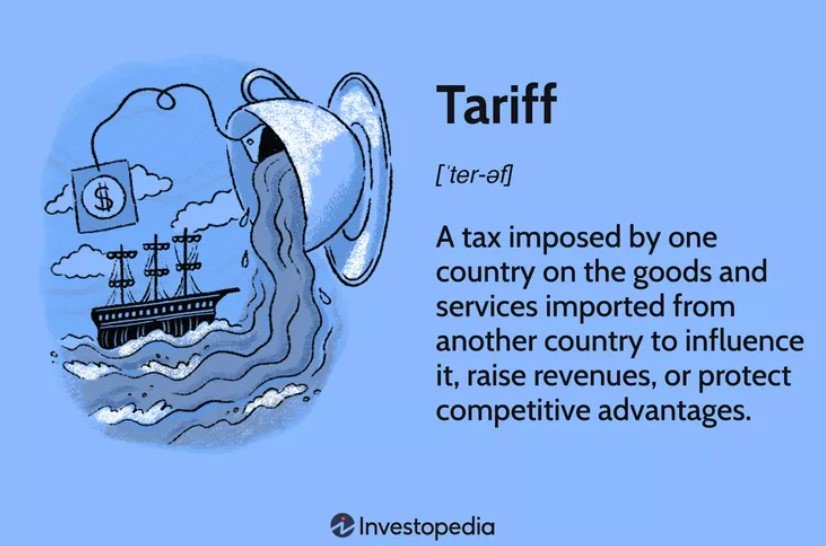
The most disastrous use of tariffs was in 1930 when the Smoot-Hawley act caused retaliation and was a major factor in turning a recession into the Great Depression.
What’s happened in the past year is that free trade took a hit when President Donald Trump began using tariffs as a trade weapon:
One of the most immediate effects was temporary spikes in shipping volumes:
- Importers rushed to bring goods into the U.S. before tariffs hit (front-loading)
- This caused surges at major ports like Los Angeles and Long Beach
- In some cases, shipping demand jumped sharply
In these conditions, ports get temporarily congested, warehouses fill up and freight rates can spike. After tariff deadlines pass, activity tends to drop off.
Those opposed to increased tariffs say U.S. container imports could fall 5–6% in 2025 vs. 2024, and some forecasts show continued contraction in 2026. Containerized shipping is the main component of business at Jaxport.
Increasing tariffs also can reroute, according to Global Trade Magazine.
A major effect on shipping isn’t just volume—it’s uncertainty: Markets hate uncertainty.
Critics of Trump’s herky-jerky policy say constant policy changes make planning difficult, shipping demand swings between surges and slowdowns and carriers and ports face “start-stop” conditions
Analysts say tariffs: “distort demand” and create swings, increase costs and complicate logistics decisions
Sharp drops in container arrivals from China were reported during tariff spikes – – double-digit declines in some cases, according to the Washington Post. That’s the kind of result Trump apparently intended, although he has not explained his goals in detail.
Also, West Coast ports (more dependent on China trade) have been hit harder, shifting cargo to Gulf/East Coast ports, which could help account for Jaxport’s results to date.
The net effect on shipping and ports thus could be: More volatility, slightly lower overall volumes and major rerouting of global trade flows, with higher costs and uncertainty across the globe.
Or, Trump could be right and trading partners will reduce tariffs and manufacturers that have fled America could return. It’s a gamble.
U.S. tariff increases have sometimes pressured countries to lower their own tariffs or open markets, but they also have led to retaliation or stalemate instead. The results are mixed.
In several cases, countries reduced tariffs on U.S. goods as part of negotiated agreements after U.S. tariff pressure:
- The European Union agreed to eliminate tariffs on many U.S. industrial goods
- Indonesia committed to cut tariffs on 99% of U.S. industrial and agricultural products
- Japan expanded duty-free quotas for U.S. agricultural exports (like rice) and increased purchases of U.S. goods
- South Korea made large purchase and investment commitments (including U.S. energy)
Some countries, such as Vietnam, Thailand, Cambodia and the Philippines, reduced U.S. tariffs in exchange for trade concessions.
But in some cases, tariffs caused retaliation and increased tariffs on U.S. goods.
Trade experts say tariffs are a bargaining tool—not a reliable way to force across-the-board tariff reductions. Trump does not agree.
Although proponents of free trade may disagree, tariffs are not always negative, Investopedia says. “They can be a means to open negotiations again between trading partners, provide each a chance to voice concerns, and even help to stabilize a country’s market.”
In Jacksonville, meanwhile, Jaxport’s total operating revenues for fiscal year 2025 were approximately $76 million, a 9% increase over prior-year revenues of $70 million.
Per the annual report: Total container volumes in 2025 were 1,388,841 TEUs (twenty-foot equivalent units), a 4% increase over fiscal year 2024. In 2025 a modernization project was completed, designed to facilitate increased international cargo volumes.
Autos and cruise ships also are a source of revenue, but both were flat for the past year.
This year the port also expects to complete the installation of two new cranes to move cargo from ship to shore. In conclusion: Whatever effects the Trump tariffs have had elsewhere, they don’t seem to have caused a dip in business at the local port, so far.