
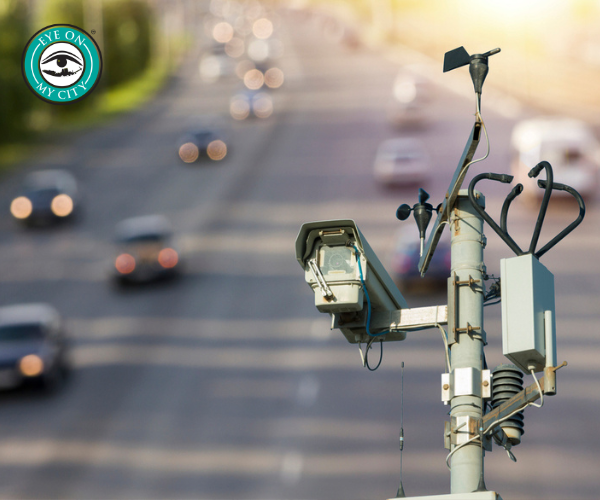
As it happens, I accidentally grasped an electric wire of controversy this week, when I had a shockingly fun time dashing off a throwaway piece about Flock surveillance cameras and heroic anti-Flock vigilantes armed with cordless saws. You might remember it. Well, reader reactions were swift, with some appreciating my sense of humor, and others not appreciating my lack of appreciation for the very, very serious privacy issues and the potential loss of our civic ability to make perfectly safe rolling stops at stop signs because coming to a complete stop is vexing, useless, and just takes too long. So I’ve reflected, like Graham Platner. Today fleshes out the debate over privacy, cameras, AI, et cetera, this time treating these vitally important issues with deadly seriousness. Well, MOSTLY seriously. Okay, SOMEWHAT seriously.
The only fair place to begin is by steel manning the pro-camera argument. From Cleveland.com’s op-ed section:
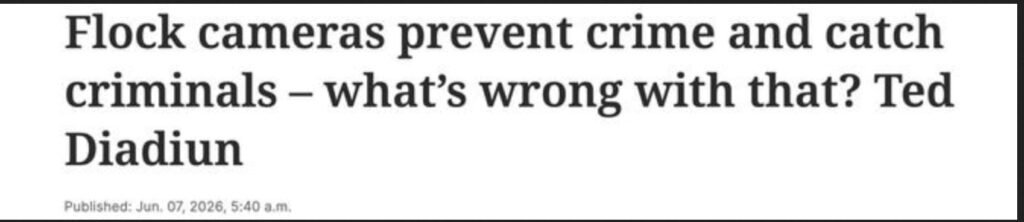
Police departments across the country will tell you —correctly— that these systems are invaluable for both fighting and preventing crime. Nothing else even comes close. It’s like giving police departments 100 more detectives.
In Joplin, Missouri, the police chief noted that their Flock system helped locate a suspect in a child sexual assault case, found missing juveniles who had run away to Florida and California, and nabbed another suspect just 14 minutes after a crime was reported. “Use of the Flock LPR system is the equivalent of having an officer standing on a street corner with a notebook, writing down license plates that go by, and reporting when vehicles pass by which we have good reason to be on the lookout for,” explained Chief Richard Pearson.
“The Joplin Police Department is committed to the fair and equitable treatment of all citizens,” said Chief Richard Pearson, “and we will never knowingly be involved with or tolerate any misuse of our authority or resources.” Not knowingly.
In Clawson, Michigan, when the city council voted 3-3 to reject renewing the Flock contract, a school resource officer walked to the podium, slapped her badge down, and walked away. Another police officer said he was considering leaving too. There was acrimony. Citizens who usually agree on everything else disagree on this. The ‘security vs. privacy’ issue crosses party lines.

“I could defend a yes vote,” said Mayor Pro Tem Aidan O’Rourke. “But I would struggle to defend a ‘no’ to the next victim of a crime we could not solve.”
We have no reliable statistics, but it is largely undisputed that camera+AI systems help solve murders, find missing children, and locate stolen vehicles. (It might even prevent election fraud, though one suspects that the lastlocation a Flock pole will be installed is near the ballot drop-off.) Former Atlanta Detective Vince Velazquez put it plainly: “It’s an invaluable tool for law enforcement to actually solve cases, homicide cases, sexual assault cases.”
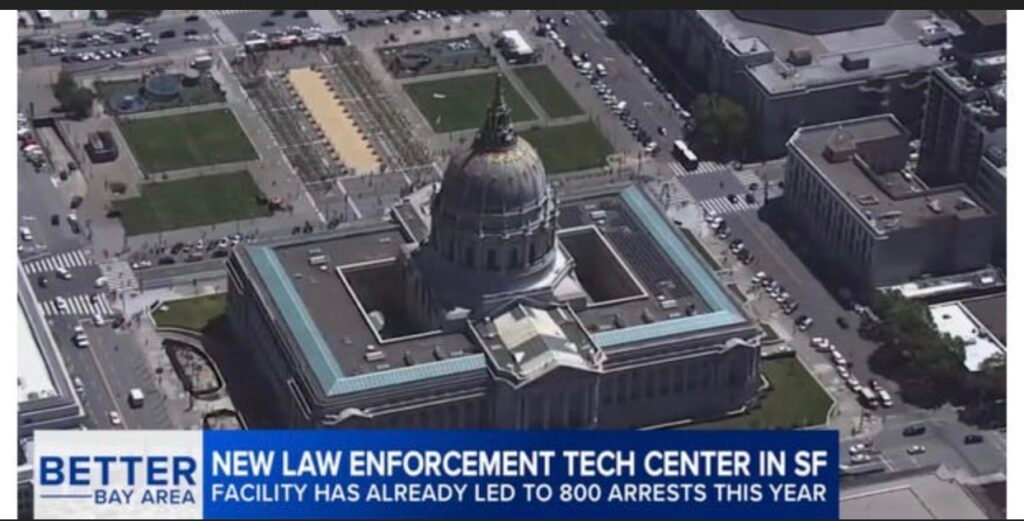
ABC-7, San Francisco, headline from December:

For obvious reasons, criminals oppose this technology for reasons other than privacy. Or at least, not just privacy. So, some degree of public criticism and push back, and some of the masked vigilantes cutting poles down, could perhaps be attributed to people who do not actually have our best interests at heart. Like drug cartels.
These issues are brand-new and have suddenly sprung upon us. The technology works. But we cannot see what perils and abuses lurk just over the event horizon.
However, we have learned a few things. The most pressing question for 2026 is: what happens when you give every cop and police department employee in America a magic all-seeing eye while trusting them to use their brand-new powers responsibly?
Spoiler: it’s going badly.
🤖 As usual, the C&C take is a little different from the public debate. This whole Flock thing isn’t really a camera story. It’s an AI story. Thousands of hours of streaming traffic video aren’t very helpful without having a cold, steely intelligence to review it all for you, helping you search by keyword, name, and plate number, and compiling a nifty global database that anyone with a password can use.
Here’s the critical thing that everyone’s missing: The biggest customer in the world for anything is government. So all rational vendors find themselves in a once-in-a-lifetime gold rush, racing their software wagons across the mountains of technology to sell government AI-powered products. And the low-hanging fruit is not using AI to help make municipal budgets more efficient so taxes can be lowered. Stop joking around.
The sweet spot is: compliance.
Not the full-on George Orwell kind of compliance. The mundane, bureaucratic, revenue-generating kind. That’s why the very first widespread government use of AI revolved around traffic cameras. Ka-ching! The next level is cracking down on citizens, legally of course.
Consider Cape Coral, Florida, where city leaders are exploring installing AI-powered cameras on garbage trucks to surveil neighborhoods for code violations during daily trash routes. The city manager called it “a more efficient way to save taxpayers’ money.” Robocop is just here to help you. A resident shot back, “Who’s to say that they’re not going to use that information for something else?”
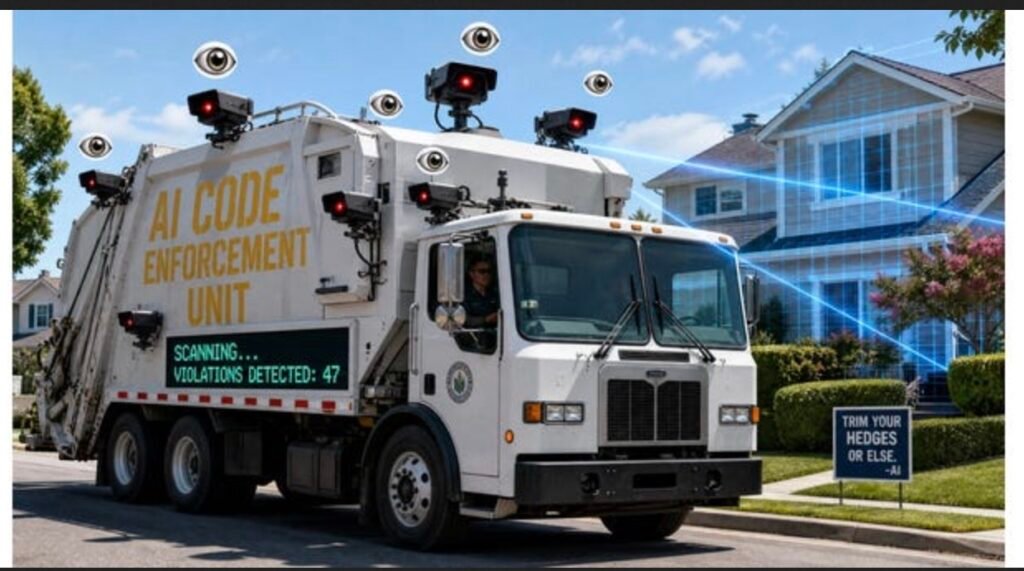
A cybersecurity expert reassured everyone at the trashcam meeting that “AI is not the boogeyman that is going to completely upend society.” Friends, if you have to persuade people that your product is not “a bogeyman that will completely upend society,” then maybe you are in the wrong line of work. Shut it down.
As AI-powered enforcement increases, the system will become increasingly less forgiving. Less wiggle room. More instantaneous detection of trivial code violations. The cameras will be on the trash trucks. The trash trucks will be on your street every week. The AI will be logging your boat, your fence height and the height of your grass to the millimeter, your flag positioning, your overgrown hedges, and your unpermitted rec room expansion into the garage.
I’m sure the system will function flawlessly. It will flawlessly eliminate any remaining margin for human imperfection. And remember: code violations generate fines, often accruing daily. Ka-ching again! It’s not just that the AI will notice your unpermitted deck. It’s that the AI will notice it, log it, and then the city will bill you $150 a day until you tear it down. For safety.
The days when you could safely keep a rusting 1987 AMC Gremlin up on blocks in your backyard because your neighbors have their own code-enforcement problems and, anyway, they aren’t snitches— those days are rapidly coming to an end. Getting away with minor code violations will disappear like smoke into the distant horizon of forgotten history. Like riding skateboards without a helmet. Or lawn darts. Good times.
🤖 Legally speaking, Flock cams and trash-truck cams are partlyconstitutional. Shocker: disruptive technology has produced thorny, novel legal issues to unravel. Acting surprised about any of this is like pretending you had no idea about the surprise birthday party that you were led into wearing a blindfold. On your birthday. At dinnertime.
SCOTUS has repeatedly held that citizens have no reasonable expectation of privacy in public places, including any place viewable from public streets and sidewalks. That’s the pro-cam argument. On the other hand, citizens must be protected from police searches without probable cause, and they must also be provided with due process. So those are pretty good arguments, too.
Last week, in fact, the Supreme Court held that ‘geofencing’ —collecting bulk cell phone data— was an unconstitutional search. ScotusBlog, June 29th:

It’s getting harder to distinguish between law enforcement collecting bulk video of license plates moving around a city and law enforcement collecting bulk cell phone tracking data. Critics would argue cell phone data is much more detailed and robust than license plates, which, after all, are mounted on your car so people can see them. The Supremes haven’t tackled Flock cameras yet. So, as they say, the jury is still out.
The sane solution is probably not to eliminate AI cameras altogether. Sally, that ship has sailed. Cameras are already ubiquitous — phones, doorbells, dashcams, Ring cams, Nests, cops’ bodycams, Flock poles, and now, apparently, are riding along with garbage men.
For Pete’s sake, every Tesla has eight cameras going, all the time, pointed every which way. That’s how deranged Democrats keep getting pinched after vandalizing totally innocent people’s cars, just because liberals have been taught to hate Elon Musk. (For waving his arm the wrong way. But not the guy with the literal Nazi tattoo. No. Not him. But alas, again I digress.)

We can’t unring the camera bell. If you think we can, I’d love to hear exactly how.
The only reasonable way forward, and this will be painful, unpopular, and expensive, is to reform the laws and codes so there’s simply less to enforce. We must sharply prune our criminal codes that produce Three Felonies a Dayfor every man, woman, child, non-gendered-person, two-spirit, furry, and so forth. We must strengthen privacy laws. We must demand warrant requirements for surveillance data. And we must prosecute every single official who misuses these systems.
And in the meantime, while we wait, there’s plenty of room for pushback— even, perhaps, civil disobedience. Certainly, for civil participation, to convince governments to cough up these reforms.
Which brings us to the most spectacular part of this story.
🤖 The cops are also being watched by the very same technology they are misusing to watch everyone else. Keep in mind the essential irony: it’s a terrific struggle to arrest anybody for pandemic or election crimes, but local cops are getting fired and arrested for Flock crimes in bulk lots. It makes you think.
Flock says it doesn’t ‘see’ widespread misuse, but one investigation found 18 cases in the U.S. over recent years just of love struck police officers using Flock to stalk romantic partners. Or, awkwardly, to stalk unwitting women the officers wished would be romantic partners. That is almost certainly a vast under reporting of the overall abuse, the tip of an AI-powered iceberg.
I rounded up a few examples, just from the last 60 days.
In Albany, Georgia, five police officers were fired and arrested after an ‘internal audit’ revealed they had accessed the Flock system multiple times for “non-law enforcement purposes.” Ahem. They were charged with misuse of license plate data and violations of their oath of office. The agency declined to share specifics about what the data was allegedly used for. (I’m going to go out on a limb and guess it wasn’t solving homicides or locating runaways.)
One day later, Greene County Deputy Quinsha Goss (if that’s her real name) was arrested after an audit found she had accessed the system for personal reasons multiple times over ninety days. The very next week, three Cherokee County deputies —Sgt. Mike Creeden, Lt. Chris Bryant, and Deputy Cynthia Jodesty— were fired and arrested for ‘unlawfully accessing’ the Flock database.
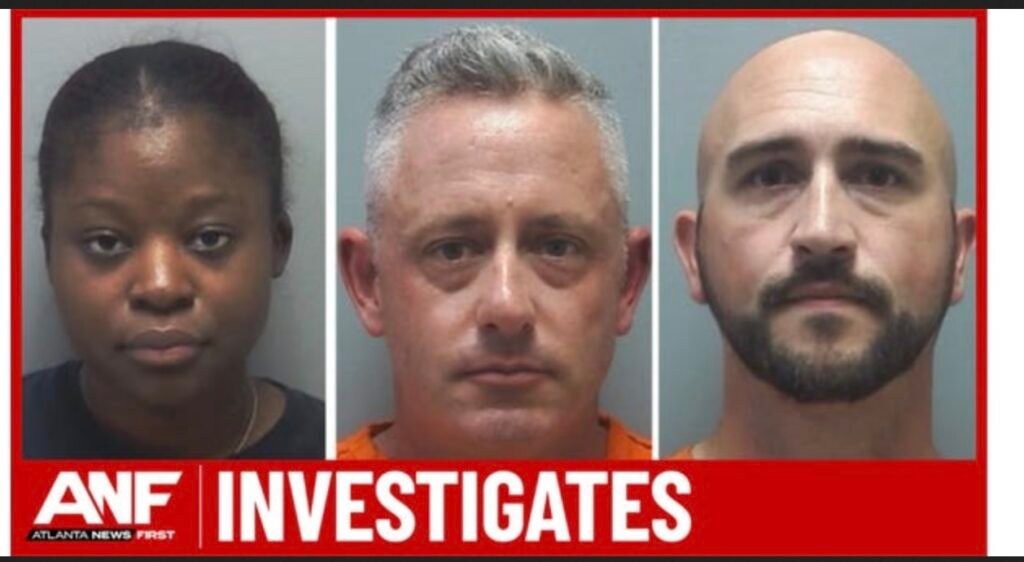
An unlucky Richmond County deputy, Jaquarius Yarbrough, was fired and arrested. He conducted multiple inquiries involving at least one license plate over a twenty-eight-day period, despite having “no authorized law enforcement need to access the Flock system as part of his assigned duties.”
In Illinois, Holiday Hills Police Chief William Copp, 54, was charged with two counts of official misconduct —a Class 3 felony— for tracking six people he knew personally. Three were women he’d dated. He also tracked one of his ex-girlfriends’ ex-boyfriend 140 times, and called the man on his police-issued phone to leave a threatening voicemail: “This is the only time that I’m going to be nice about this.”
The man later told a court he feared for his safety and his kids’ safety because “he knows everything about me.” The judge denied the emergency co-contact order because —and I am not making this up— it had “not been shown that the harm sought to be prevented would likely occur if Chief Copp were given prior notice of the petitioner’s efforts to obtain judicial relief.”
So the stalking police chief got advance warning of the restraining order. Thanks a lot, judge.
In Milwaukee, Officer Josue Ayala, an eight-year veteran, was charged with misconduct for searching a girlfriend’s license plate and her ex-boyfriend 179 times. Totally not obsessed or anything.
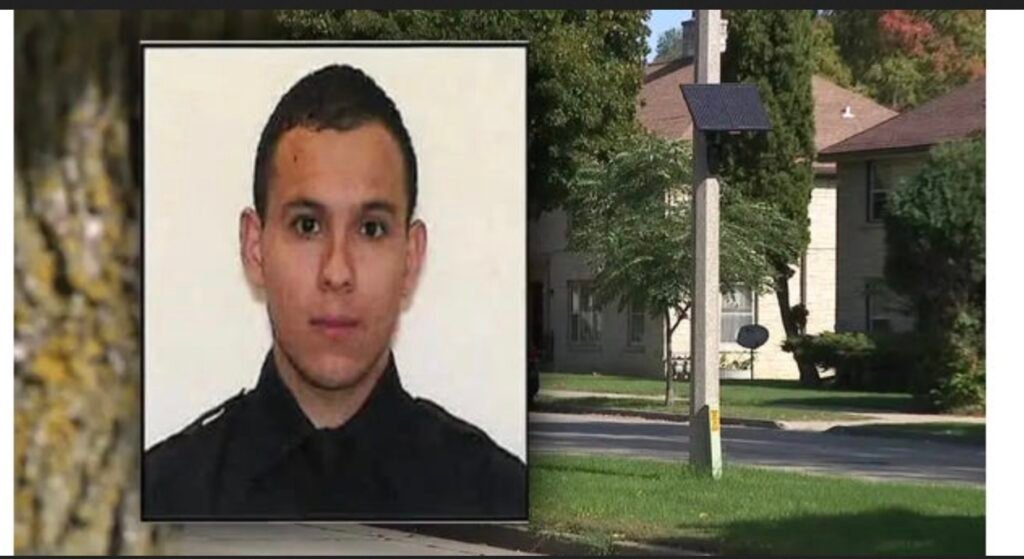
Remember how Flock swore that people accessing the system are required to enter a case number? Officer Ayala just entered: “investigation.” What investigation? “We don’t know, because there’s a lack of transparency,” commented an ACLU policy analyst.
The misuse was not discovered internally— one of the victims complained after searching for their own plate on a website called haveibeenflocked.com, and then alerted police. (I did not make that up, either. There is a website called haveibeenflocked.com. America is a wonderful country.)
In Wisconsin, officer Cristian Morales —who had already been ejected from the Outagamie County Sheriff’s Department, which had flagged him as a ‘negative separation’ in the state database— was then hired by the Menasha Police Department eight months later. He is now facing a felony for using Flock to track his ex-girlfriend.
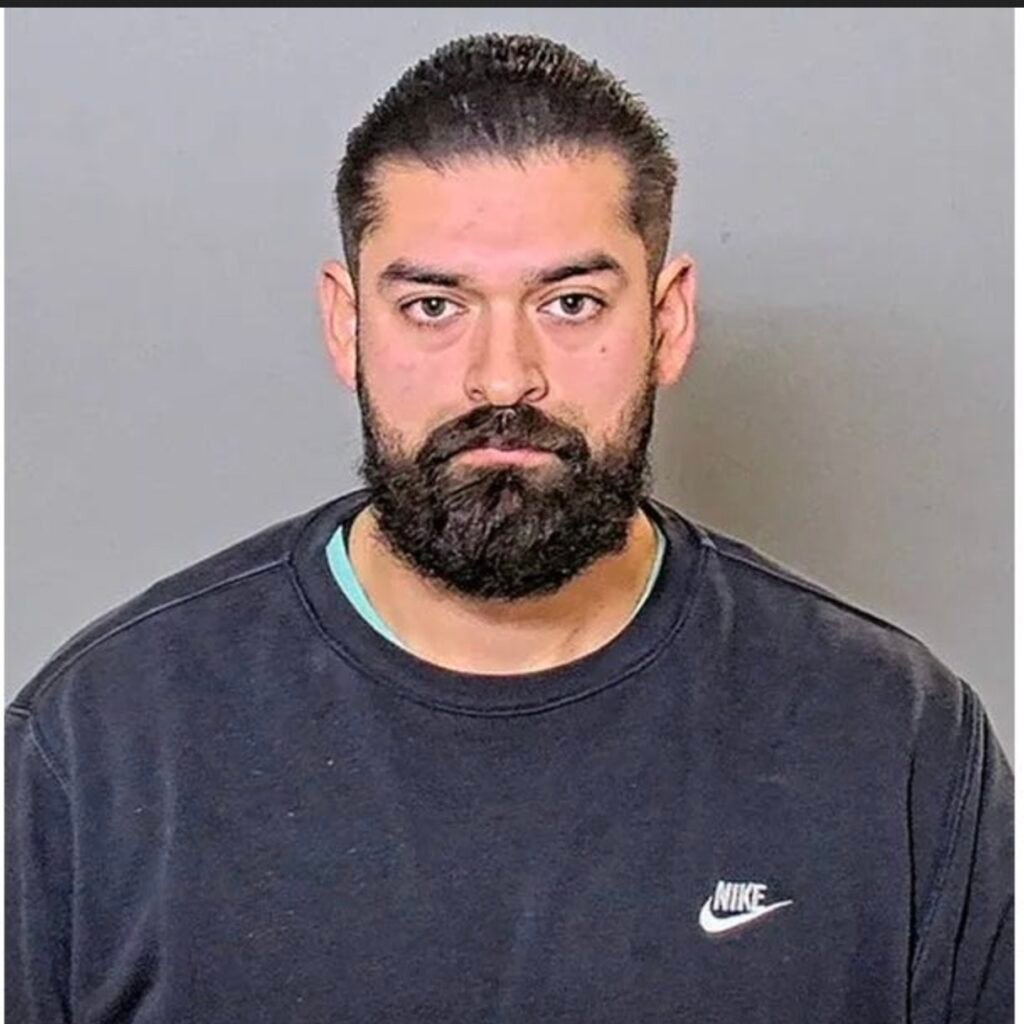
The Menasha PD chief, who presided over Morales’ hiring, resigned in March.
In California, former Costa Mesa officer Robert Jay Josett pleaded guilty to using Flock cameras to track his own wife. Well, not just her. He also tracked his mistress, and his mistress’s new boyfriend. He also bombarded his mistress with texts and calls —as many as 58 times in a single day— after she ended the relationship.
“No one should have to live in fear of being tracked through law enforcement databases by someone with a badge and a gun because they decided to call off a romantic relationship,” said the Orange County DA, stating the obvious.
It’s practically a meme now. In Kansas, Police Chief Lee Nygaard used Flock cameras to check his ex-girlfriend’s whereabouts 164 times and her new boyfriend’s whereabouts 64 times over four months. He trailed them out of the city in his police car and “confronted the female and told her to get back to town.” The lovesick Romeo:
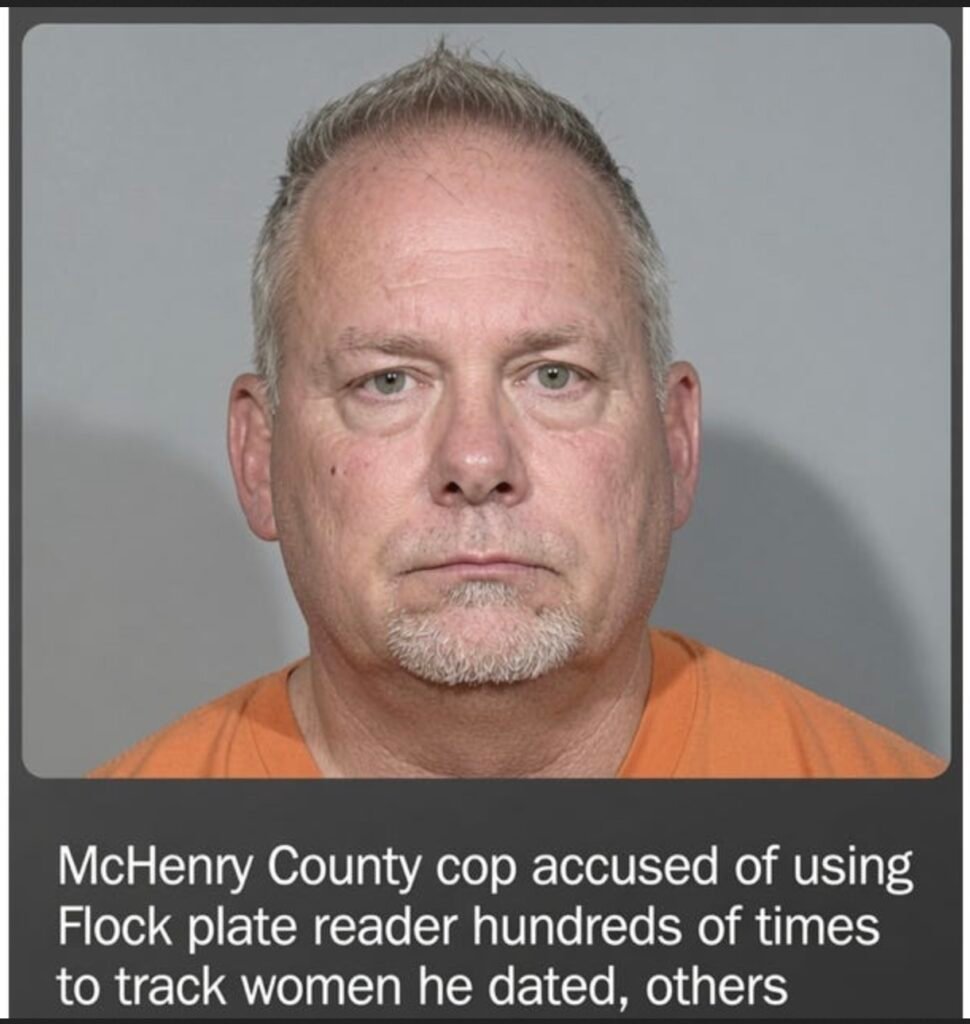
Chief Nygaard initially claimed he was following them because of drug issues,but “ultimately admitted that jealousy was involved in his decision to do so.” You don’t say. He resigned and lost his police certification, but faced no criminal charges. His city administrator said, and this is a direct quote, they had placed a lot of trust in him as police chief. “Unfortunately, he proved not to be trustworthy.” I think we have a winner for understatement of the decade.
In Colorado, Columbine Valley Sgt. Jamie Milliman showed up at a Denver woman’s doorstep with a summons, insisting he had “no doubt” she had stolen a $25 package based on Flock camera footage. He told her, “You know, we have cameras in that town. You can’t get a breath of fresh air in or out of that place without us knowing.”
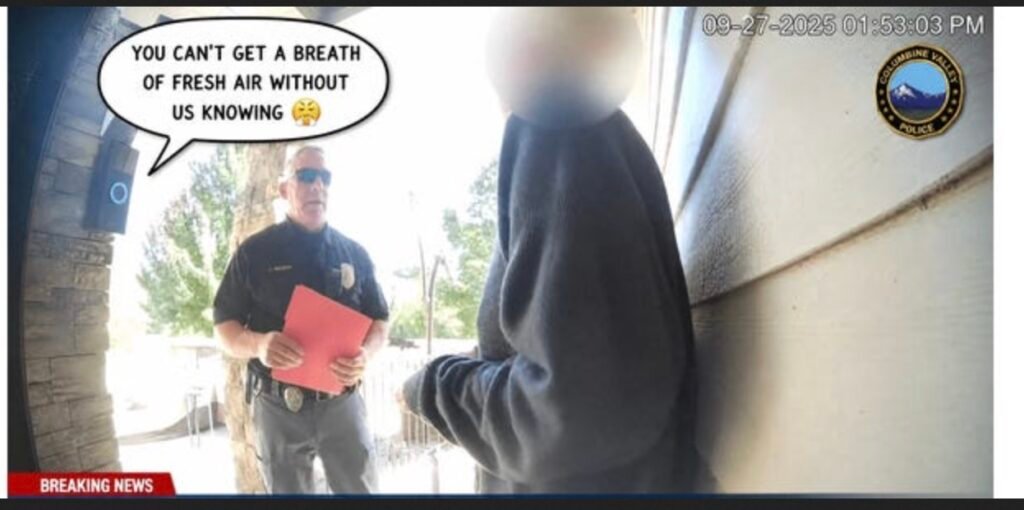
Houston, we have a problem. If you like fresh air, that is.
Officer Milliman refused to show her the footage. But she held an ace card. When she offered her Rivian’s onboard camera footage to prove her innocence, he told her to bring it to court. She spent weeks collecting evidence, called the police chief and town officials every day for a week —with no answer— and eventually got the charges dropped.
The officer will receive “appropriate disciplinary action,” the town said, without specifying what that means. Presumably, mandatory DEI training. Which, come to think of it, might be an effective deterrent.
In a strange outlier of a case, Sandy Springs, Georgia, Reserve Sgt. Francis Esposito used his city Flock login to run license plates— allegedly transferring the data to Signal 8, a private company he also worked for. Investigators concluded it was corporate espionage. Esposito promptly resigned after being questioned about it. Signal 8 denied receiving any data.
The whistleblower who initiated the investigation was a former Signal 8 employee who told investigators that the Flock data was actually being used for beta testing the company’s new AI products. “The data is the gold mine for literally any startup, any company that is trying to grow,” opined one Emory University professor.
In Joplin, Missouri, a single officer accounted for roughly 25% of the entire department’s Flock usage and searched one particular license plate 395 times in 14 months. That officer entered things like “DWI” or “Warrants” in the case number box. A local activist group called Deflock Joplin —yes, a real organization— claims their investigation uncovered the abuse.
🤖 Flock’s innocuous-looking founder, Garrett Langely, argues, not unpersuasively, that this appalling tsunami of privacy violations by law enforcement pales in comparison with catching murderers and pedophiles and restoring lost kids to frantic families. And it proves that privacy violators, including officials, are being caught and punished. So … it’s complicated.

So what is the point? There are two big ones.
First, quis custodiet ipsos custodes (Portlanders: “who watches the watchers?”) The answer, it turns out, is the same technology the watchers are using to watch everyone else.
Every Flock search is logged. Every search requires some kind of justification. Every audit trail is captured, recorded, and waiting for someone to look. The cops are being watched by the same cameras they’re using to monitor their mistresses and stalk their exes.
It’s the perfect irony: the surveillance state is gobbling up its own. (At the local levels, that is. Not feds.) The AJC noted that “experts say abuse of the technology is inevitable when so much data is available.” The same data availability that enables the abuse also makes it trivially easy to catch.
Second, the people in charge know these abuses are potentially radioactive. The ‘AI+Cameras=Safety’ business model depends on public trust. If the public concludes that these systems are primarily being used by cops to stalk their exes and run corporate espionage for private companies, the whole project is in jeopardy.
So when a violation is discovered, the response is swift and public— firings, arrests, press releases. The message is: we take this seriously. The subtext is: please don’t cancel our camera contracts.
Some Milwaukee alders put it plainly in their letter to the city’s Fire and Police Commission: “When powerful surveillance systems exist without strong, enforceable audit protocols and independent oversight, the risk of abuse is not theoretical — it is foreseeable.” Milwaukee’s police chief, Jeffrey Norman, said, “I cannot guarantee that no one will ever push the envelope, cross the line. But I am saying that we need to ensure we are going to hold them accountable when they do violate that trust.”

That’s the story’s buried lede. The Founders knew this. That’s why they designed a system of checks and balances from a Christian worldview— a system that expects human fallibility and corruption. There are none without sin; no, not one. Rom. 3:10-12; Psa. 14, 53; Ecc. 7:20. Too often, the public debate forgets that common-sense expectation of human misconduct.
The problem that all these examples prove isn’t a few bad actors. The problem is that the camera system is designed with the assumption that law enforcement officers would use it responsibly. That assumption is, to put it charitably, optimistic. The Atlanta Journal-Constitution reported that Wisconsin officers entered required case numbers like “investigation,” “suspicious,” “cooch,” or just a “.” (a period) to justify their searches.
Flock’s own training videos, according to an Atlanta News First investigation, showed police using the system to track suspects “from location to location to location”— even though Flock publicly insists its cameras don’t track people. They need to get their story straight and cut out the wordplay.
As I said, the solution will not ultimately be a ban on cameras. The solution is to treat surveillance technology contracts like public interest infrastructure agreements— with warrant requirements, independent auditing, mandatory data deletion, and serious consequences for misuse.
The technology is already here, right in your pocket or purse. The question is whether we’re going to govern it like adults— or just keep trusting that the next police chief is a saint instead of a jealous ex-boyfriend.
But until they get the idea and install appropriate guardrails, people will keep cutting them down.