
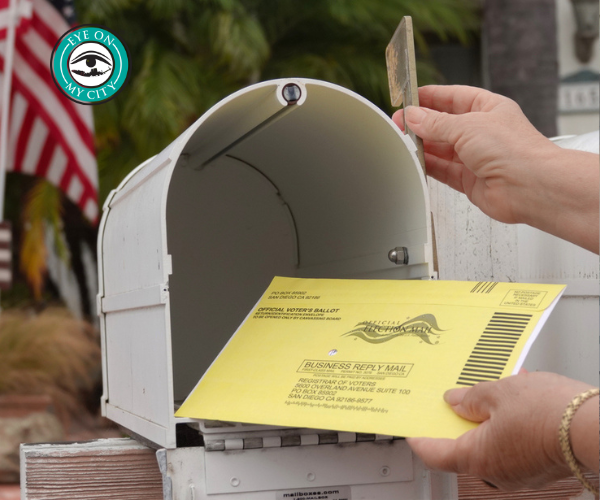
We have a rare, massive win out of the D.C. Circuit Court of Appeals. On Friday, a three-judge panel temporarily revived the Trump Administration’s executive order requiring strict new security and transparency standards for mail-in voting ahead of the 2026 midterms. The ruling allows the U.S. Postal Service to proceed with implementing the new rules, pausing a lower court’s injunction that had blocked them. Left-wing Democracy Docket, predictably, melted down into a goo of rage. They ran a breathless article titled, “Appeals court allows USPS to move forward with Trump’s anti-mail voting order, for now.”

“Anti-mail voting order” is DD’s euphemism for “basic security standards.” The USPS proposed rule does not outlaw “mail.” It merely requires all mail and absentee ballots to be placed in secure envelopes marked with the official Election Mail logo. More importantly, it requires Intelligent Mail Barcodes to track ballots throughout the entire mailing process, start to finish.
States must even provide a pre-mailing notice to USPS —a “Mail-In and Absentee Participation List”— detailing the voters who’ll be included and the unique barcode associated with each voter.
Why does this terrify Democrats? Because it closes two of the biggest, most obvious vectors for mail-in ballot fraud.
First, it eliminates the “last-minute manufactured ballot” problem. By requiring states to submit a list of expected mail-in voters before the ballots go out, and tying each ballot to a unique, trackable barcode, it becomes mathematically impossible for a sudden, unexplained pallet of ballots to mysteriously appear at a counting center at 3:00 a.m. If the barcode wasn’t on the pre-approved outbound list, the USPS system flags it.
And if a ballot is not in the USPS database at all— then it must have come from somewhere else.
Second, it stops any backdating of postmarks. One of the persistent concerns with mail-in voting has been the potential for corrupt postal workers to illegally backdate postmarks on ballots received after Election Day, allowing late ballots to be counted anyway.
The Intelligent Mail Barcode tracks the ballot’s physical progress all the way through the postal system in real-time. A manual, backdated ink stamp means nothing if the digital barcode scan shows the ballot didn’t enter the postal stream until two days after the election.
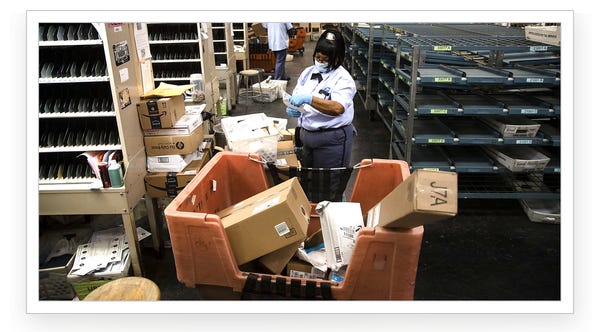
It is a simple, elegant, technological solution to a massive vulnerability. It’s not perfect. It just makes cheating a lot harder. And the left hates it.
The NAACP sued to stop the rule, and a liberal district judge (some of you may recognize the infamous judge, Emmet Sullivan) agreed, issuing an injunction— putting the whole project on hold. But the D.C. Circuit —not exactly a bastion of conservative jurisprudence— smacked down Sullivan’s order.
🔥 In their short, two-page order, the three-judge appellate court panel found that the Trump administration had “satisfied the stringent requirements” for overriding Sullivan’s injunction, and had also made a “strong showing that they will likely succeed” on the merits. If you’ve been following my tutorials on injunctions, that was the most important finding.
But the best quote from the order is about the urgency of implementing these rules now, before the midterms. The judges noted that, without a stay of Sullivan’s injunction, the USPS would be unable to issue a final rule before the November midterms, and said:
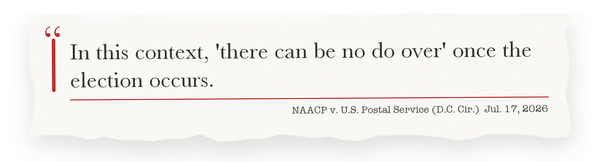
Precisely correct. There’s no way to un-ring the bell of a fraudulent election. Hence— the show must go on.
The timing of this victory is also deeply interesting. Just one week earlier, President Trump fired the three remaining commissioners of the U.S. Election Assistance Commission (EAC). The EAC is the federal agency that ostensibly helps states administer elections. The left panicked over that move, too, claiming Trump was trying to “exert control over elections.”
But look at the chessboard: Trump clears out the obstructionist leadership at the EAC, and a week later, his administration wins a crucial court battle to force the USPS to track and verify every single mail-in ballot. It sure looks a lot like a coordinated, multi-front offensive to secure the midterms before the predictable November chaos can begin. Just saying.
The rules aren’t perfect, and the legal battle isn’t over. But for the first time in a long time, the momentum on election integrity is moving in the right direction, and the D.C. Circuit of all places just gave it a massive push.