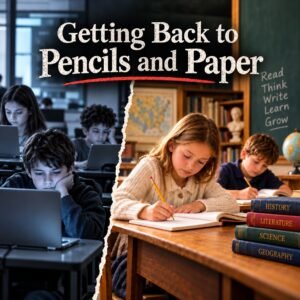
No matter where you stand politically, when it comes to education, current issues that affect our schools and its students are at the top of the list of concerns in our country.
Statistics reported by the National Assessment of Educational Progress (NAEP), often referred to as the “Nation’s Report Card,” on students’ test scores from 2024 are giving us the first update on high school seniors’ academic progress since the pre-COVID assessment in 2019, and those numbers are discouraging. Additionally, the American National Adult Literacy Statistics from 2023 revealed that at least 45 million American adults, ages 16-74, are functionally illiterate, reading and comprehending below a fifth-grade level.
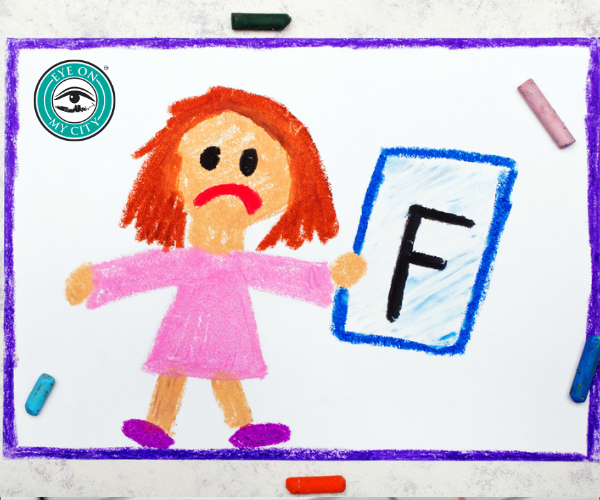
According to the NAEP, in 2024, 12th grade test scores in math and reading dropped markedly—not just compared to 2019, but to the lowest levels in 20 years. A third of high school seniors (32%) scored below the basic level in reading, and almost half (45%) scored below basic in mathematics. And if those numbers aren’t troubling enough, the U.S. Dept. of Education found that only 54 percent of adults read at a proficient level. With so many students transitioning into adulthood without basic reading and math skills, thoughts have turned to other venues for educating children, including private schools, charter schools, and homeschooling.
“We have a big problem,” said Beth Heath, founder and president of We Can Be Heroes Foundation, an organization that focuses on educating citizens on America’s founding values. “Our legacy in this country is important, and our public school system is deteriorating. Regardless of how much money we put into it, it continues to decline.”
As a way of keeping education in the forefront of the public eye, Heath’s organization recently sponsored a forum as part of the Bridge the Break in Education Series held at the Mandarin Room on Greenland Road in Jacksonville. The event featured exhibitors and three nationally known speakers publicizing education reform.
Alex Newman, an international journalist and educator, is the senior editor, foreign correspondent, and consultant for The New American Magazine and president of Liberty Sentinel Media. In his presentation, Newman stated, “The public schools are undermining freedom and Christianity,” and he emphasized keeping the public schools from capturing the hearts and minds of children and creating a population that is subservient and obeys their rules. Newman commented, “We need to focus on little people in our homes before going outside.” He said, “We need to put parents in charge,” which drew some applause from the audience of nearly 100 people.
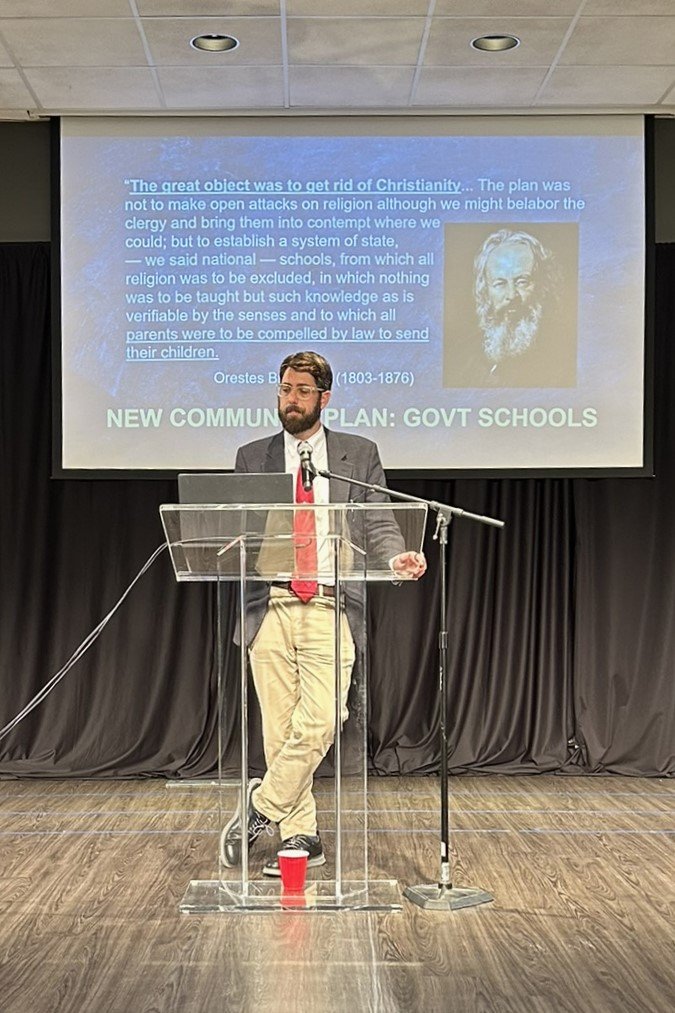
Brett Pike, founder of classicallearner.com, a homeschool curriculum and educational media company, said in a conversation before his presentation that education should not be about passing tests. “We have some big-time issues in education today,” he said. “Students don’t know how to think or how to learn,” Pike said. “If you want your child to get a good education you do the opposite of what is happening in the public schools — focus on skills over subject matter. Pike does not say subject matter is not important, but his curriculum highlights critical thinking, skill development, and real-world experience. For Pike, critical thinking is key because it is the process of learning itself.
Andrew Muller, a researcher, journalist, and photographer, serves as the chief of operations for the Liberty Sentinel, a news and commentary platform focused on liberty and individual rights that aims to support conservative values and free-market principles. Muller, who teaches U.S. government and Constitutional courses, emphasized the importance on protecting America’s moral, constitutional, and religious foundations.
All three speakers vehemently disagree with those who feel that government, not parents, should control what children learn and what tests they must take to earn a diploma.
A number of exhibitors took part in this event forum. Classical education resources, books, videos, and curriculum were available to attendees and the public.
One exhibitor was Blake Harper, who runs The Library Restoration Project in Jacksonville, who has also been very involved in collecting names and circulating petitions for the removal of books from local libraries that are deemed inappropriate.
One of Harper’s main concerns is that many parents have allowed the narrative of the teacher unions and school administrators to make decisions that affect their children. “The left is destroying our culture,” Harper said. “We need to stand up to those attacking our values by finding a way to send our message and not turn people’s minds off. Libraries are about education, not indoctrination.”
Statistics for this article were taken from several organizations that produce reports on math and literacy rates across the country. Among the findings were:
- Math proficiency increased for fourth and eighth graders between 2022 and 2024 and decreased for 12th graders between 2019 and 2024
- National assessments show that a significant percentage of students are not meeting grade-level math or reading standards.
- Disparities exist in math and reading proficiency among different demographic groups, with gaps often seen by race and socioeconomic status.
- Math and reading proficiency are linked to future academic success and career opportunities, emphasizing its importance in education.
Many states are implementing new curricula and teaching methods to improve math and reading outcomes.