The SAVE Act is poised for a possible vote in the Senate next week (more on that in a moment). Meanwhile, yesterday, Democracy Docket ran an unintentionally terrific story headlined, “With SAVE America Act stalled, Florida House passes its own version.” The reporter sneered at Florida’s effort as “a voter-suppression bill,” and included several hysterical (and delicious) quotes.
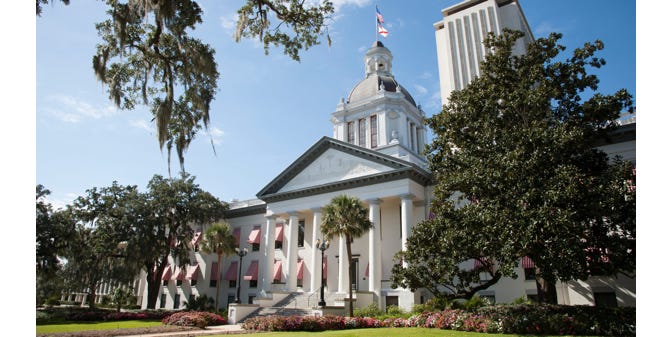
“The Florida House of Representatives voted 83-31 Wednesday,” Democracy Docket reported, “to move forward with a sweeping voter suppression bill that could disenfranchise tens of thousands of Floridians, at least, by creating new requirements for citizenship checks.”
Under the bill, residents cannot register to vote unless the state DMV database verifies their citizenship or they provide proof of citizenship. The bill would also require the state to verify the citizenship status of all existing voters and eliminate some forms of I.D. that voters can currently use to verify their identity at the polls (if you can believe this). Floridians, for instance, could no longer use debit or credit cards, student IDs, or retirement center, neighborhood association, or public assistance identification.
Oh, no! It is literally the worst, most racist and sexist thing ever.
State Representative RaShon Young (D-Orange) warned darkly about serious consequences. “This is fearmongering and disenfranchisement and voter suppression dressed up as security,” he bleated loquaciously. “This is modern-day gatekeeping and bureaucratic obstruction, administrative overreach, and poll tax by paperwork.”
Florida isn’t alone. Other red states have enacted similar state-level proof-of-citizenship laws, including Arizona, New Hampshire, Louisiana, Wyoming, Indiana, and Ohio. Other states are currently considering similar legislation, including Utah, South Dakota, and Missouri. (Texas tried and failed to pass a citizenship bill last June. Maybe Texans should try again.)
The Florida House’s version of the bill would become effective in January 2027. But the companion bill pending in the Florida Senate would take effect this July, before the November midterm elections.
Ladies, guess who’ll be hardest hit? “Married women who have changed their last names could be among the most impacted by the legislation,” the Docket warned breathlessly. Whatever will they do? The problem is just too difficult for girls to solve. It’s hopeless.






One response to “Oh No — Florida Wants to Verify Citizenship Before Voting. The Horror.”
Very good as always