Not enough to worry about? Don’t worry, government has you covered.
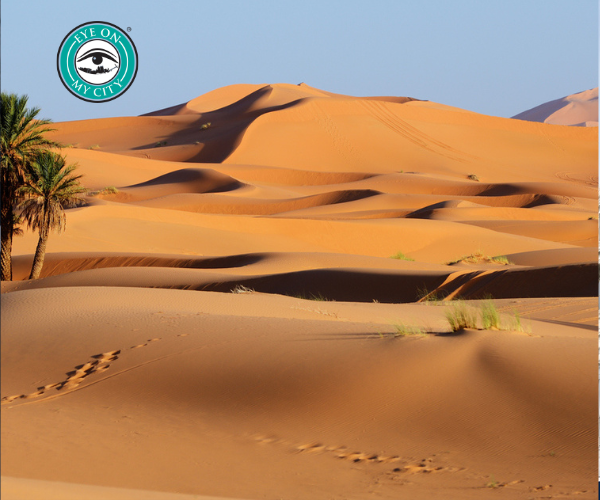
In addition to all the other horrors, such as heat islands and food deserts, it turns out that the Sahara Desert is falling on you.
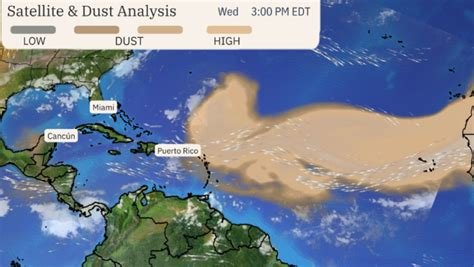
Yep, the Saharan Air Layer (SAL) is coming. Actually, it comes every year and it’s here now.
About 60 million tons of dust from the Sahara Desert in Africa allegedly has blown across the Atlantic Ocean and is over Jacksonville right now.
According to NOAA, “outbreaks can form when ripples in the lower-to-middle atmosphere, called tropical waves, track along the southern edge of the Sahara Desert and loft vast amounts of dust into the atmosphere. “
The good news is that the SAL can suppress hurricanes, and we are in the hurricane season in Florida. However, because it stifles cooling thunderstorms, temperatures can be hotter in some places – something Florida doesn’t really need.
SAL also makes some nifty sunsets. And maybe it helps replenish Florida beaches thinned down by chronic erosion. Who knows?
The bad news is that it could cause breathing problems for some people, science says.
Health officials say it is important that people with chronic lung diseases take precautions to maintain control of their underlying conditions and reduce exposure to dust by limiting time outdoors during dust storms.
Saharan dust particles are very small, which makes them easy to inhale into the lungs and potentially enter the bloodstream. People living with chronic respiratory conditions, children and older adults are particularly vulnerable to dust’s negative health effects. However, everyone has the potential to experience respiratory symptoms related to dust exposure, the American Lung Association says.
Climate alarmists say that SAL is a result of “climate change,” which has been going on for billions of years, but scientists didn’t discover SAL until about 50 years ago.
(One might ask: How do you miss 60 million tons of sand?)
Moreover, how is it possible that libs have failed to call for a Department of Air Purification and Flying Sand Reduction in the federal government? It would likely be as effective as the departments of education, energy and environment, and might cost even more, which would be a real plus for those determined to spend every dime you earn.