As our own corporate media has found this terrific story uninteresting and unworthy of mention, we must rely on the UK’s International Business Times, which yesterday ran this encouraging article below the headline, “Younger US High-School Students Report Lower Gay and Bisexual Identification, CDC Data Reveals.” USAID could not be reached for comment, since it is out of business.

We must also thank psychologist Jean Twenge, who published a Substack analysis of recent CDC numbers. She found that atypical sexual lifestyle choices among teenagers is now, mercifully, falling, and most sharply among the youngest demographic (high school freshmen).

A closer look at the graph reveals fascinating figures. Rates of queer self-identification skyrocketed during the Biden Administration, almost doubling between the 2019 survey and the 2021 report. They held through 2023’s update, then collapsed in the 2025 figures. Weird! The IBJ was baffled at what might explain the reversal after years of steady increases, and took pains to point out that “the figures alone cannot establish why reported identification has changed.”
The new downward trend appears to be real and sustained. Last Fall, Eric Kaufmann, a politics professor at the University of Buckingham who tracks rates of gender and sexual minority identification among young people, noticed the same thing. In his October 2025 tweet on X, he wrote that “trans identification is in free fall among the young.” He added, “Non-conforming sexual identity (queer, questioning, etc.) is also in sharp decline.”

Despite the conspicuous and highly suggestive timing, Kaufmann summarily rejected politics, the idea that teenagers have become more conservative. “It’s not because the kids became less woke, more religious or more conservative,” he insisted. That’s when the story’s buried lead finally surfaced. When asked whether improved mental health played a role, Kaufman answered, “Yes, in part.”
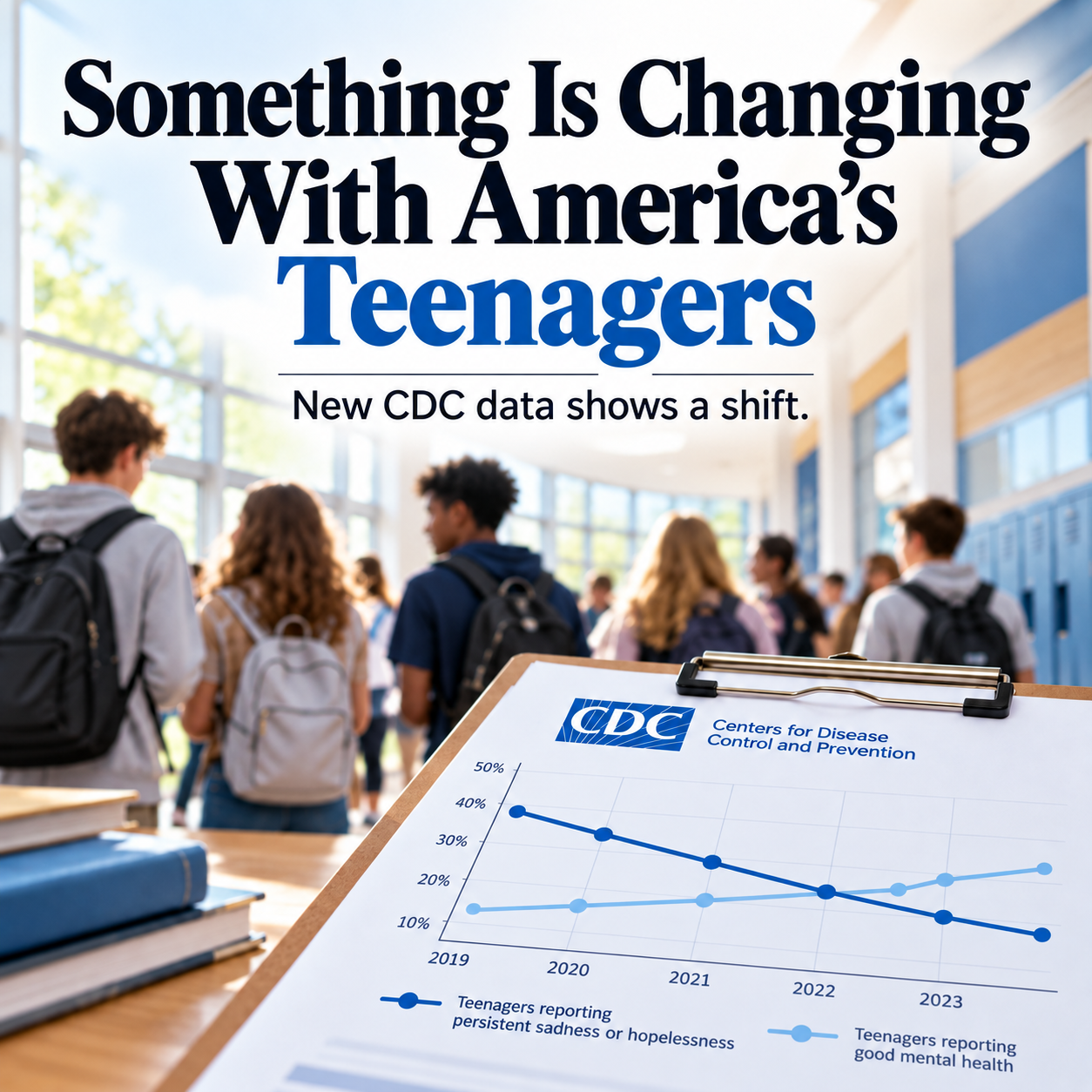
Then, almost as an afterthought, the article delivered its most encouraging and most suggestive news: “The 2025 report does record an improvement in one mental-health measure: the proportion of students reporting persistent sadness or hopelessness fell to 33 percent, from 40 percent in 2023.”
We shall set aside the morbid fact that the Journal did not consider falling queerness identifications to be “an improvement,” raising the question of whether it considers that to be a setback. (If so, as seems likely, it was too chicken to say it directly.)

Regardless, young people’s sky-high rates of depression are also falling, right along with their rates of confused sexual self-description. A strange coincidence! Cue the standard cries that “correlation does not prove causation,” except when it does (which is whenever a correlation supports a woke narrative). Could the two trends —LGBT+ identification and depression— be connected?
I can see it cutting both ways. Could confusing children about their sexual identities possibly cause them to get depressed? I realize that is a crazy thought, but we must consider it. Or, on the other hand, do depression and deep anxiety cause kids to question their sexuality? It’s another terrific line of potential research that will never be conducted.
In fairness, we are also moving farther beyond the government’s pandemic response, so improvement in youth mental health could also benefit from that. But I struggle to enunciate a theory of why LGBT+ self-identification would correlate with any pandemic recovery.
What we know for sure is that, starting in late January 2025, the federal government pulled the plug on the gay propaganda machine (USAID) and went to war against transgender “medicine,” as we explored in the previous story. We also know that many states like Florida have led the way. Since midway through the pandemic, after shocked parents started to see what their kids were actually being taught in schools instead of math and science, states like Florida passed laws banning queer and trans sex ed for younger kids— who are now entering high school. Remember don’t say gay?
Check out this timely headline, published yesterday by News-6 Orlando:

In 2022, former Disney CEO Bob Chapek declared war on Florida Governor Ron DeSantis over Florida’s Parental Rights in Education bill, HB 1557, which critics sneeringly called the “don’t say gay bill.” The name stuck, and not in the way they’d intended. Disney decided to publicly oppose the law for reasons that business schools will study for decades, along with Bud Lite’s exercise in brand self-immolation. Disney, one of the state’s largest political donors, even campaigned against Republicans who supported the bill.
This was a bold choice in a state that enjoyed a comfortable Republican super-majority and governor. The feud ended with the state stripping Disney of its unique gift— a whole county called the Reedy Creek District that Disney was allowed to run as a corporate town with its own police, firefighters, and most importantly— freedom from taxes. The flushing noise could be detected from some SpaceX satellites. Disney sued and lost. Many times. Badly.
In his new tell-all book, Behind the Castle Walls: My 30 Years at the Happiest Place on Earth, former CEO Chapek unhappily reported that its legal battle with the Sunshine State cost Disney “tens of millions” in legal fees, plus “untold damage” in public relations. I think accountants, aided by AI, are still calculating the untold public relations damage. They expect to have a preliminary figure by early 2036.
I mention Disney’s painful example of woke mass delusion not because it popped up again in this week’s news, nor because it is more entertaining to revisit those details than spend an entire weekend at the Magic Kingdom, but because of what it should suggest to the baffled journalists at the International Business Times as a potential explanation for what kinds of causes they might consider as explanations for falling queerness among the nation’s youth. Don’t say gay.
The causal connections might be impossible to prove scientifically, but the calendar is sitting right there out in the open. As the nation headed into the first month of Trump’s second term, media was still reporting the inexorable, post-millennial increase in both queer self-identification and rising anxiety among the people most exposed to the country’s education system. Headline from Gallup, February 2025:

Curiously, even though IBT and Professor Kaufman waved off politics as being involved in any way, Gallup did find a clear political divide: “Whether due to political sorting or something else, Democrats (14%) and independents (11%) are far more likely than Republicans (3%) to identify as LGBTQ+.” Just saying. I’m not accusing Democrats of trying to turn their kids gay. Seen on X today:

What are we to make of these developments? Even if causal factors remain uncertain (and probably always will), we can celebrate the great news. After years —decades— of relentless bad news about our children’s worsening mental health crisis, hope has suddenly bloomed. And without judging adults’ personal choices, we can appreciate the apparent turnaround in whatever social contagion was distorting children’s sexual self-identification at wildly higher and improbable rates compared to the general public.
Progress! But that’s not all. We also have shocking progress in what might be the most unexpected place of all: the federal red-tape dispenser.