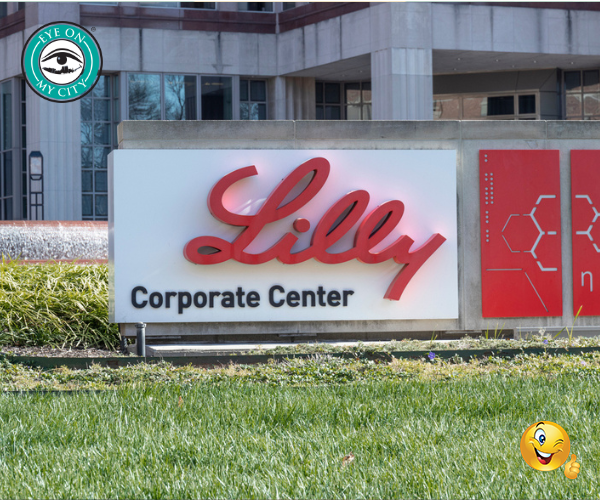
On Nov. 12, Eli Lilly delivered a shot across the bow of CVS Caremark
This is a huge move, as Eli Lilly has to sell its drugs through prescription benefit managers (PBM), and CVS Caremark has the largest market share in that field, controlling prescription medications for 100 million Americans.
PBMs are middlemen in the drug supply line that determine what drugs we can use and at what price. They control the market through the construction of formularies, which are the approved lists of drugs that an insurance plan will cover. Pharmaceutical companies can sell their drugs only if they are on the formulary, and they can get on the formulary only by paying rebates (kickbacks) to PBMs. This is a pay-to-play system that raises the price of medications and restricts the options of drug purchasers.
PBMs don’t research, manufacture, distribute, or perform any unique critical service in the drug supply chain.
Lilly was motivated to drop CVS Caremark as its PBM after CVS Caremark dropped Eli Lilly’s popular GLP-1 drug Zepbound from its largest commercial formularies and replaced it with Wegovy, a GLP-1 drug made by Danish company Novo-Nordisk. This results in Lilly not having access to tens of millions of patients.
This wasn’t the first time that CVS Caremark excluded Eli Lilly products from their formularies. The first exclusionary formulary was invented in 2012, and CVS Caremark’s standard control formulary dropped Lilly’s Humalog in favor of Novo Nordisk’s Novolog. Both of these drugs are similar short-acting insulins, and the result of the exclusionary formulary is that it increased the price of insulin by 1200 percent and patients died because they couldn’t afford their insulin.
Zepbound and Wegovy are both effective weight-loss medications, but they aren’t identical. Zepbound works on two different receptors that help control appetite and make you feel fuller. The two receptors are glucagon-like peptide-1 (GLP-1) and glucose-dependent insulinotropic peptide (GIP). Wegovvy works only at the GLP-1 site.
A study comparing Zepbound to Wegovvy found that patients taking Zepbound lost an average of 20.1 percent of their body weight, compared with 13.7 percent for those taking Wegovvy. Because of these differences in results, a class action lawsuit has been filed against CVS Caremark for dropping Zepbound from its formularies.
The move by CVS Caremark to drop Zepbound is concerning on many levels, and these include:
• PBMs shouldn’t be able to dictate the price and what drugs we have access to.
• PBMs shouldn’t be allowed to choose the drugs on the formulary based on which pharmaceutical companies pay them the highest rebate.
• Zepbound and Wegovy aren’t equivalent, and patients should have both as an option.
This wasn’t the first time that CVS Caremark excluded Eli Lilly products from their formularies. The first exclusionary formulary was invented in 2012, and CVS Caremark’s standard control formulary dropped Lilly’s Humalog in favor of Novo Nordisk’s Novolog. Both of these drugs are similar short-acting insulins, and the result of the exclusionary formulary is that it increased the price of insulin by 1200 percent and patients died as they couldn’t afford their insulin.
The other concerning issue is that CVS Caremark is favoring a foreign company, Novo Nordisk of Denmark, over a domestic company, Eli Lilly of Indianapolis, IN. Eli Lilly announced that they will build four new pharmaceutical manufacturing plants in the US.
Three of the four plants will produce the active ingredients of the medications, and we learned in COVID-19 that it is critical that we manufacture drugs and medical supplies in the U.S. These four plants will bring the total manufacturing investment in the U.S. to over $50 billion since 2020!
We need to encourage all pharmaceutical companies to produce their drugs in the U.S., and we can do this by allowing these medications to be sold to us.
The great news is that Eli Lilly is making moves that lead me to believe they are going to break free of the PBMs and sell their life-saving drugs directly.
The first step Eli Lilly has taken is to sell a number of their most popular medications directly to the public through LillyDirect.
You can access LillyDirect via telehealth or by having your physician write a prescription. The medications can be delivered to your home or picked up at Walmart Pharmacy. The price of Zepbound is $449 per month if you commit to four months, compared to up to $1,049 per month for a single dose.
Eli Lilly also struck a deal with the Trump administration to sell its drugs at most-favored-nation pricing to Medicaid and Medicare patients for many of its most popular drugs. Most-favored-nation pricing means that we pay no more for drugs than other countries do. This means that in 2026, Medicare beneficiaries will pay no more than $50 per month for the weight-loss and diabetes drug Zepbound. Upon FDA approval, cash-paying patients will pay no more than $449 for the multi-dose pen form of Zepbound.
Eli Lilly is also going to contract with employers to sell its weight loss drugs directly. This was previously done through PBMs, and 154 million patients receive their health insurance through their employer.
Thus, Eli Lilly will now have programs to sell drugs directly to:
• Cash-paying patients
• Medicare patients
• Medicaid patients
• Patients who receive health insurance through their employer
Before this, all of these patients had to go through a PBM. My prediction and hope is that Eli Lilly will stop selling medications through PBMs and sell them directly to customers. The average reduction from list price for all of Eli Lilly’s drugs is 60 percent! This means that PBMs artificially inflate the price of Lilly’s drugs by 60 percent and that Lilly receives 40 percent of the list price. The PBM is receiving more money than Eli Lilly without making the drugs!
If Eli Lilly isn’t planning on dropping the PBMs, I am throwing down the gauntlet and imploring them to do so ASAP. If Eli Lilly drops the PBMs and sells to us at 40 percent of the previous price, this will be a huge benefit for all of their patients. The other pharmaceutical companies will then follow Eli Lilly, and they will also stop using the PBMs.
If the pharmaceutical companies stopped using PBMs, it would save US patients $356 billion a year, as that is the amount PBMs receive in discounts from drug companies.
It is time for Eli Lilly to free itself and the American people from the elevated costs demanded by the middleman, and in doing so, lower the costs of all drugs in the U.S.