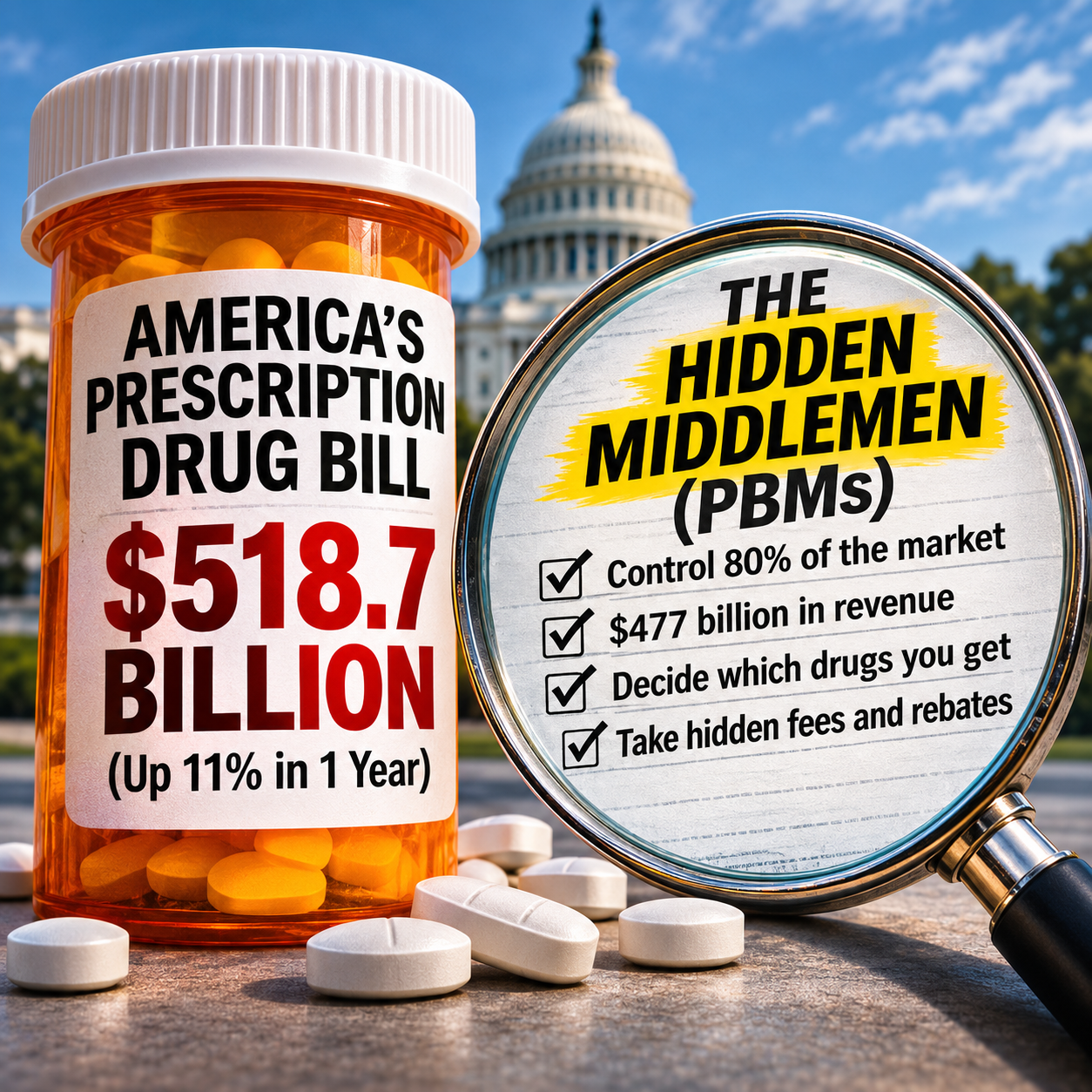
In 2025, Americans spent $518.7 billion on prescription drugs, up 11% in a single year. We pay nearly three times what people in other wealthy countries pay overall, and more than four times as much for brand-name drugs. If we simply paid the average price of those countries, we would have spent $186 billion and kept $322 billion in our pockets.
We have the biggest drug market on earth. We should be getting the best deals. Instead, we get the worst.
One major reason we overpay for drugs is a group of powerful middlemen that most people have never heard of: Pharmacy Benefit Managers, or PBMs. They decide which drugs your insurance covers, which pharmacy you can use, and how much we pay. The three largest PBMs control 80% of the prescription drug market and took in an estimated $477 billion in revenue in 2025 alone.
Many of the brokers and consultants who help companies choose a PBM also get paid by those same PBMs, creating a quiet conflict of interest that can push costs higher.
On October 26, 2026, the Department of Labor issued a new rule that forces these middleman to show their cards. For the first time, large self-funded employer health plans- the kind that cover 90 million Americans- will get a clear look at the money.
PBMs and their affiliated brokers must disclose, up front and on an ongoing basis:
- What the plan itself is paying them
- All the hidden, “indirect” money they receive from other sources
That hidden money includes manufacturer rebates and fees, the difference between what the plan is charged and the pharmacy actually receives (spread pricing), claw-backs and retroactive fees taken from pharmacies, and price-protection deals with drugmakers. Plans can audit the numbers at least once a year.
The ability to audit matters because of a federal law called the Employee Retirement Income Security Act of 1974, or ERISA. If your company runs a self-funded plan, it has a legal duty to act in employees’ best interests and not overpay. This duty is known as a fiduciary duty. For years, the numbers were so opaque that fulfilling that fiduciary duty was nearly impossible. The new rule hands employers the information they need to negotiate harder and demand better deals.
This rule is a real step forward, but it is not a magic wand. The three biggest PBMs are subsidiaries of some of the largest corporations in America.
- Optum Rx, part of UnitedHealth, is number 3 on the Fortune 500.
- CVS Caremark, part of CVS Health, is number 6 on the Fortune 500.
- Express Scripts, part of The Cigna Group, is number 14 on the Fortune 500.
They own their own pharmacies and can steer patients to those pharmacies to protect profits. History shows these companies are skilled at adapting when rules change.
That’s why many employers are already looking for alternatives. A recent survey of more than 400 companies found that nearly half had moved away from the big three PBMs. Transparent PBMs that work with the employer to lower drug spending and increase access to drugs are gaining ground.
President Trump has used the tools available to him to shine a light on one of the most opaque corners of American healthcare.
The next steps- stopping PBMs from owning pharmacies and preventing insurers from owning PBMs- will require Congress.
In the meantime, self-funded employers now have clearer information and real alternatives. Their employers deserve both.