
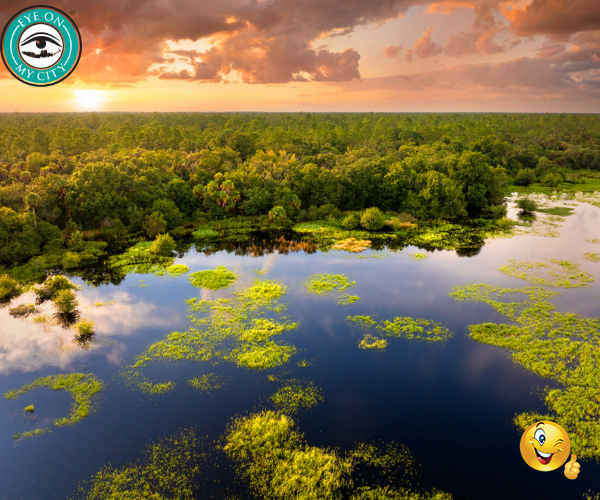
Florida lawmakers have filed what supporters describe as the most comprehensive river restoration and conservation investment proposal of the 2026 legislative session — a plan that treats Florida’s rivers, springs, and surrounding communities as a single, connected system rather than a series of isolated projects.
Filed January 5, SB 1066 and HB 981, titled the Northeast Florida Rivers, Springs, and Community Investment Act, outline a coordinated strategy to restore the Ocklawaha River while investing in outdoor recreation, public safety, economic development, and long-term water quality across a 12-county region stretching from Lake Apopka to Jacksonville and the Atlantic Ocean
A System-wide Approach to River Restoration
At the center of the legislation is restoration of the Ocklawaha River to its natural, free-flowing state, including breaching the Kirkpatrick Dam and reconnecting Silver Springs, the Ocklawaha, and the St. Johns River — Florida’s largest river system.
Supporters say the proposal stands apart from past efforts by addressing not only environmental restoration, but also economic transition, recreation access, landowner impacts, and public safety — with an emphasis on keeping surrounding communities economically strong throughout the process.
“This legislation is our region’s Everglades restoration, reconnecting rivers, improving fishing and boating opportunities, and benefiting communities along the 217-mile river way,” said Rep. Wyman Duggan. “It’s time to let the Ocklawaha flow again” .
Sen. Jason Brodeur described the bill as a fresh approach that balances conservation with community stability, ensuring areas around the Rodman Reservoir remain positioned for long-term success
Jobs, Economic Growth, and Outdoor Recreation
An independent economic analysis released in 2025 estimates that restoring the Ocklawaha River and investing in outdoor recreation infrastructure would generate significant returns:
- 859 job-years created through restoration and construction
- $198.23 million in cumulative net economic benefits over 20 years
- $2.09 returned for every dollar invested
The bill includes funding for upgraded boat ramps, fishing piers, paddling access, and public recreation projects along the Ocklawaha, Silver, and St. Johns river ways, with targeted grants for local communities
Public Safety and Flood Resilience
The legislation also addresses public safety concerns tied to aging infrastructure. The Kirkpatrick Dam is currently classified as “high hazard,” meaning its failure could threaten lives and more than 500 downstream properties.
Breaching the dam would eliminate that risk while restoring approximately 7,500 acres of natural floodplain forest, improving storm water absorption, reducing flood hazards, and enhancing downstream water quality.
Why Northeast Florida Is Paying Attention
For Northeast Florida, the proposal has implications well beyond the Ocklawaha basin. Improved freshwater flows into the St. Johns River support fisheries, boating, tourism, and coastal economies, while reconnecting habitat within the Florida Wildlife Corridor strengthens long-term environmental resilience.
“The proposed legislation is a game-changer for the St. Johns River and fishing in Northeast Florida,” said Evan Tucker of Cowford Conservation. “Ocklawaha River restoration puts this ecosystem back to the way God intended, while enhancing access to our waterways, boosting economic development, and fostering our outdoors community. This is a pivotal step towards preserving our outdoor heritage for generations to come”
What Comes Next
The bills will move through committee during the 2026 legislative session. If approved, the Northeast Florida Rivers, Springs, and Community Investment Act would mark a shift away from piecemeal restoration efforts toward a comprehensive, regional framework — one that treats Florida’s waterways as essential infrastructure for environmental health, economic vitality, and community resilience.