
There is plenty to be disturbed about in the allegations coming out of Cornell University.
A former Cornell student alleges that seven members of the Chi Phi fraternity sexually assaulted her in 2024 after a night involving alcohol and drugs. The case is now back in the hands of prosecutors.
Let the legal system determine what happened and who is responsible.
But another conversation has already begun.
We’re hearing that the Cornell case is evidence of the “patriarchy.”
Maybe. But I think there is another question worth asking.
What about the culture?
Cornell isn’t exactly known as a bastion of traditional conservative thought. In a 2015 analysis based on faculty political donations, Cornell ranked as the fourth-most liberal university in the country.
That same year, another rather embarrassing statistic surfaced. After the Ashley Madison database was hacked, the Cornell Review reported that 273 accounts were connected to Cornell.edu email addresses — more than any other elite university in the comparison it cited. To be fair, an email address doesn’t tell us whether someone was a professor, administrator, student or alumnus. And it certainly doesn’t prove anything about Cornell as an institution.
But it does make me wonder why the immediate response today is so eager to blame something called “the patriarchy” without spending nearly as much time examining the culture we have created.
Cornell has existed for years in an academic environment filled with the language of inclusion, equity, empowerment and progressive values.
So here’s my question:
Has that culture actually produced greater respect for women
Because from where I sit, women have lost ground in some very important ways. And women ourselves need to be willing to talk about it.
Think about what we have watched happen in just the last few years:
- Female athletes have found themselves fighting to preserve women’s sports and opportunities created specifically for biological women.
- Women in medicine, academia and other professions have sometimes found themselves navigating intense professional and social pressure simply for speaking plainly about biological sex.
- Women have watched the very definition of the word woman become politically contentious.
- Women who disagree with prevailing cultural orthodoxy can find themselves ridiculed or dismissed rather than heard.
- And too often, other women who might privately agree remain silent because speaking up can come with a cost.
Where are the women standing beside them? That’s the part I keep coming back to.
I lived through the women’s liberation movement. For a while, I was part of it.
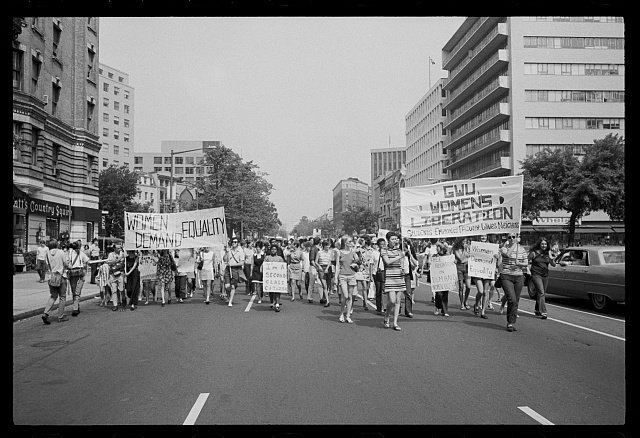
There were things about that movement that needed to happen. Women deserved opportunities. We deserved to be heard. We deserved equal treatment under the law and the freedom to pursue our talents and ambitions.
But somewhere along the way, I began to notice something happening to some of the women around me.
The movement that was supposed to make us stronger seemed, in some circles, to be making people bitter. Angry. Suspicious. Even mean.
Men became the enemy. Marriage could be portrayed as oppression. Motherhood could be treated as something lesser. Femininity itself sometimes seemed like something women were supposed to apologize for.
That wasn’t liberation to me.
And I walked away from that part of it.
Not because I believed women should be weak.
Quite the opposite.
I believed — and still believe — that bitterness and resentment are terrible foundations on which to build either a life or a society.
Now, decades later, I find myself asking whether we have taken another wrong turn.
In our effort to demand respect for women, have we somehow helped create a culture that doesn’t even know how to define, honor and protect women anymore?
Respect isn’t created by shouting louder. It isn’t created by finding another group to blame. And it certainly isn’t created by attaching “patriarchy” to every terrible thing a man does.
Men are capable of terrible things. Women are capable of terrible things.
Institutions are capable of protecting themselves instead of the people they are supposed to serve.
That is why character, truth and accountability matter.
If a woman says she was sexually assaulted, her allegation deserves a serious investigation.
The accused deserve due process.
Evidence matters.
Truth matters.
And an institution’s reputation should never matter more than either one.
But I would also like women to start asking ourselves some harder questions.
Have we stood beside female athletes when they believed their opportunities were being taken away?
Have we defended female doctors, professors, teachers and professionals who were afraid to say what they believed?
Have we allowed political loyalty to become more important than defending another woman?
Have we taught young women that men are their enemies rather than teaching both young women and young men how to respect one another?
And have we become so focused on demanding respect that we have forgotten how a culture of respect is actually built?
Because that’s what I want now. Not another women’s movement based on anger. Been there…done that. Not another war between men and women.
And certainly…not another political slogan.
I want a culture that appreciates women again.
A culture that respects motherhood without telling women motherhood must be their only calling.
A culture that celebrates the strength of women without pretending men and women are identical.
A culture where women can disagree with one another without trying to destroy one another.
A culture where women defend other women even when it is politically inconvenient.
And a culture where good men are encouraged to respect, defend and cherish women rather than being told that masculinity itself is the problem.
Maybe that’s old-fashioned. I’m okay with that.
Because I don’t think women become more valuable by demanding that everyone acknowledge our value.
I think we rebuild that respect through character, courage, truth, dignity and by teaching the next generation — boys and girls — that women are worthy of respect.
So when I hear the Cornell story immediately described as another example of “the patriarchy,” I hesitate.
Maybe we should look deeper.
Maybe before blaming one sex, one political party or some enormous social system, we should examine what kind of culture we have all helped create.
And perhaps women especially should be willing to look in the mirror and ask:
Have we defended womanhood when it mattered?
Have we defended other women when it wasn’t convenient?
And are we building a culture that truly respects women — or simply one that knows how to talk about respecting them?
Those are harder questions than blaming the patriarchy.
But my “woman’s intuition” tells me they might be much more important.