Why “aging in place” policies must confront the dark reality of guardianship abuse before they make things worse.
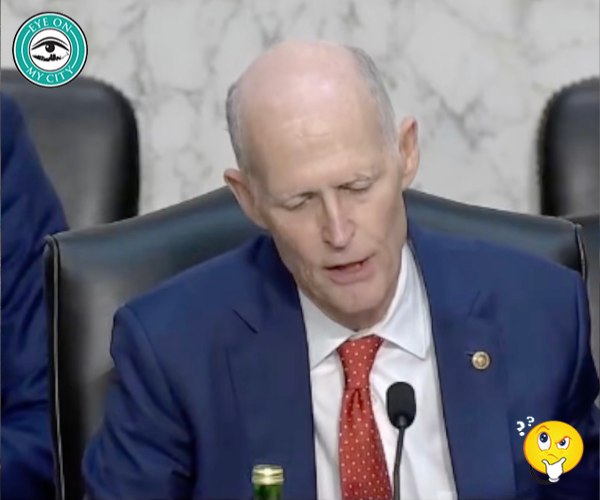
Senator Rick Scott’s recent hearing before the U.S. Senate Special Committee on Aging struck an inspiring tone. The message was simple and heartfelt: seniors deserve the chance to spend their later years in the comfort of their own homes — surrounded by their familiar neighbors, their church or synagogue, and the communities they’ve built over a lifetime.
The conversation spotlighted loneliness, the importance of strong family ties, and the value of faith-based and local organizations. Witnesses described creative partnerships, caregiver burdens, accessible housing challenges, and the need to reauthorize the Older Americans Act to support aging in place.
All of this rings true.
But it also rings dangerously incomplete.
Because anyone living in Florida — ground zero for guardianship abuse scandals — knows a hard truth that Washington often overlooks:
Good intentions from DC, without guardrails, can feed the very machine that has been trafficking seniors through Florida’s guardianship system for profit.
And that machine doesn’t need more fuel.
What the hearing got right
Senator Scott is correct that seniors overwhelmingly want to age in place.
At the hearing, he emphasized:
- The dignity of remaining in one’s own home
- The role of family and local communities
- The need to combat isolation
- The importance of reliable support systems during the holidays and beyond
Witnesses reinforced this vision:
- John Offerdahl showcased a Broward County model that uses competition, fresh food, and community volunteers to support seniors with real personal connection.
- Jason Resendez highlighted the crushing load on family caregivers — 50% reporting financial strain, many performing the equivalent of a full-time job unpaid.
- Allison Barkoff and Emily Ladau stressed that home- and community-based services (HCBS) not only honor seniors’ preferences but also cost less than institutional care.
Done right, these programs keep seniors safe, connected, and independent.
But done wrong, they can create brand-new pathways to strip away seniors’ rights.
And Florida has already shown how fast that slide can happen.
The Elephant in the Room Topic that was Avoided: Guardianship
Despite hours of testimony, one crucial phrase barely surfaced:
Guardianship abuse.
You cannot talk about “aging in place” or senior independence without acknowledging the ever-present threat that a senior’s independence can be taken away — often quickly, quietly, and permanently — through court-ordered guardianship.
Florida knows this horror story by heart.
The state has weathered scandal after scandal:
- Probate Judges who throw out well documented wills, trust documents, and other important estate paperwork and do not adhere to the wishes of the senior.
- Guardians who isolate seniors from their families
- Guardians who drain estates dry
- Guardians who place do-not-resuscitate orders without family consent
- Guardians who bill thousands while seniors lose homes, rights, and dignity
- Guardianship associations filled with individuals later arrested or investigated
This isn’t rare. It’s systemic.
Advocates now openly refer to it as:
- Estate trafficking
- Senior trafficking
- A guardianship crime syndicate
And they’re not exaggerating.
When DC expands systems of “support,” “services,” and “care coordination” — especially through networks of nonprofits — Florida families need to ask:
Are we helping seniors stay in their homes, or are we building smoother on-ramps into guardianship?
Because the same nonprofits that show up in Senate hearings as partners and “experts” are sometimes the exact organizations deeply embedded in Florida’s guardianship pipeline.
The Real Danger: “I’m from the government, and I’m here to help.”
Programs designed to help seniors can quickly become tools to control seniors:
- Home visits can become pre-guardianship evaluations.
- Care coordination can become evidence against a senior’s independence.
- Nonprofits can become gatekeepers who benefit financially from funneling seniors into guardianship, conservatorship, or unwanted institutional care.
- State aging plans can become bureaucratic roadmaps for removing family decision-making.
Florida has lived this nightmare.
We know exactly how “help” becomes harm.
This is why “aging in place” — without strong protections — can actually accelerate the removal of seniors from their homes, their families, and their freedoms.
A Friendly but Firm Warning to Senator Scott
Senator Scott deserves credit:
- His caregiving tax credit is a smart policy.
- His emphasis on family and community is right.
- His understanding of Florida’s aging population is accurate and deeply personal.
- His support for competition — not monopolistic service models — is refreshing and long overdue.
But here’s the warning Florida families need him to hear:
The nonprofits and professional networks that will show up at your door asking for federal dollars are not all benevolent. Some of them were central players in the guardianship scandals that exploited Florida seniors.
Without protections, expanding their reach is not compassion —
it’s catastrophe.
How to Support Seniors Without Strengthening the Guardianship Syndicate
If Congress truly wants to help seniors remain free, independent, and in their homes, lawmakers must pair any policy expansion with:
1. Family-First Requirements
Guardianship must be the last resort — not the first administrative shortcut.
2. Ironclad Due Process
Full notification, full representation, transparent hearings every time.
3. Radical Transparency
Track guardianship filings, outcomes, complaints, and money flows.
4. Independent Oversight
Not associations run by the very individuals who profit from guardianship.
5. Tie Federal Funding to Anti-Exploitation Safeguards
Any nonprofit receiving funds must prove they do not participate in guardianship pipelines.
6. Elevate True Community Care
Support churches, synagogues, volunteer networks, and family caregivers — the real backbone of aging in place.
AND MOST IMPORTANT OF ALL — Wills, Trust Documents, and other legal paperwork set up by the Senior MUST be considered written in stone. Probate Judges must respect the Seniors wishes. Period.
The Bottom Line
Senator Scott is right to focus on aging in place.
He is right to champion families.
He is right to spotlight community solutions.
But Florida’s reality demands a clear-eyed addition:
Unless DC builds in protections, its well-meaning programs could supercharge Florida’s guardianship machine — the very system that has turned too many seniors into revenue streams rather than human beings.
We urge Senator Scott:
Champion aging in place — but defend freedom in place while you do it.
Florida seniors deserve nothing less.
And if Senator Scott would like to speak to seniors and their families affected by the crime wave of Guardianship in Florida – we will be happy to set that up.









2 responses to “Good Intentions in DC Can Feed Florida’s Guardianship Machine”
Billie, this is exactly what we seniors need – a discussion with Sen. Scott, who is well-meaning but perhaps unaware of the pitfalls in this pre-draft of Aging In Place as-proposed. Please keep usw advised of any developments in this matter!
We will update as this issue unfolds. Happy new Year!