
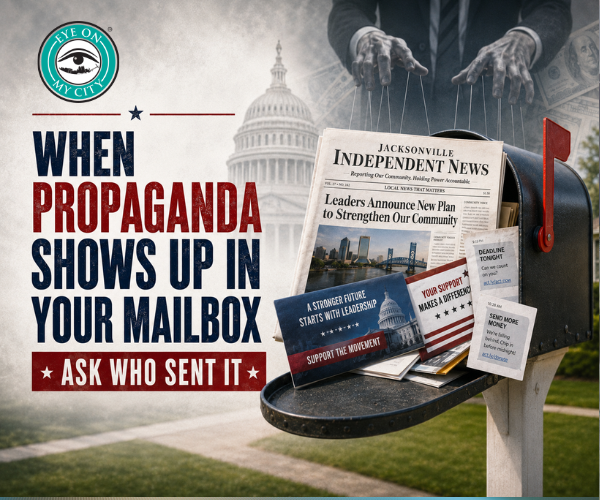
A Georgia resident recently opened his mailbox and found what looked like a local newspaper: The Georgia Independent. He hadn’t subscribed to it, requested it, or even heard of it. Yet there it was, complete with Georgia stories, recipes, a crossword puzzle and all the familiar trappings of a hometown paper.
But it wasn’t really a hometown paper at all.
The Georgia Independent is part of a broader political media operation tied to American Independent Media and the American Independent Foundation, based in Washington, D.C. Similar publications have appeared in battleground states around the country, designed to look and feel like local journalism while delivering carefully framed political messages.
That doesn’t mean the publication should be banned or censored. Far from it. But readers should know what they are holding.
The real question is simple: Who paid for it, who selected the audience, and what do they want the reader to believe?
That matters because political persuasion works best when it doesn’t look like political persuasion. A newspaper-style product carrying recipes, community stories and crossword puzzles feels familiar and trustworthy. Put political messaging next to that softer content and the political material can begin to inherit some of that credibility.
This strategy isn’t unique to one side of politics. Politically funded outlets designed to resemble local journalism have emerged on both the left and right. Voters simply need to become much more skeptical consumers of what lands in their mailbox, inbox and phone.
And perhaps Republicans should take a lesson from all this.
While sophisticated political operations are identifying persuadable voters and placing targeted messages directly into their homes, Republican voters seem to spend half their day deleting fundraising texts and emails screaming about another emergency deadline, another “500% match,” and another urgent request to send mo’ money.
Maybe the political class should spend a little less time asking its own voters for money and a little more time figuring out how to communicate effectively with people who aren’t already convinced.
The next time an unfamiliar political publication suddenly appears in your mailbox, don’t just read the headline. Read the fine print. Look up the organization behind it.
Then ask the question every voter should be asking more often:
Who wants me to believe this — and who paid to put it in my hands?
Read the x post from this Georgia resident – it’s worthy of your time: https://x.com/Schwalm5132/status/2095143339913785584?s=20