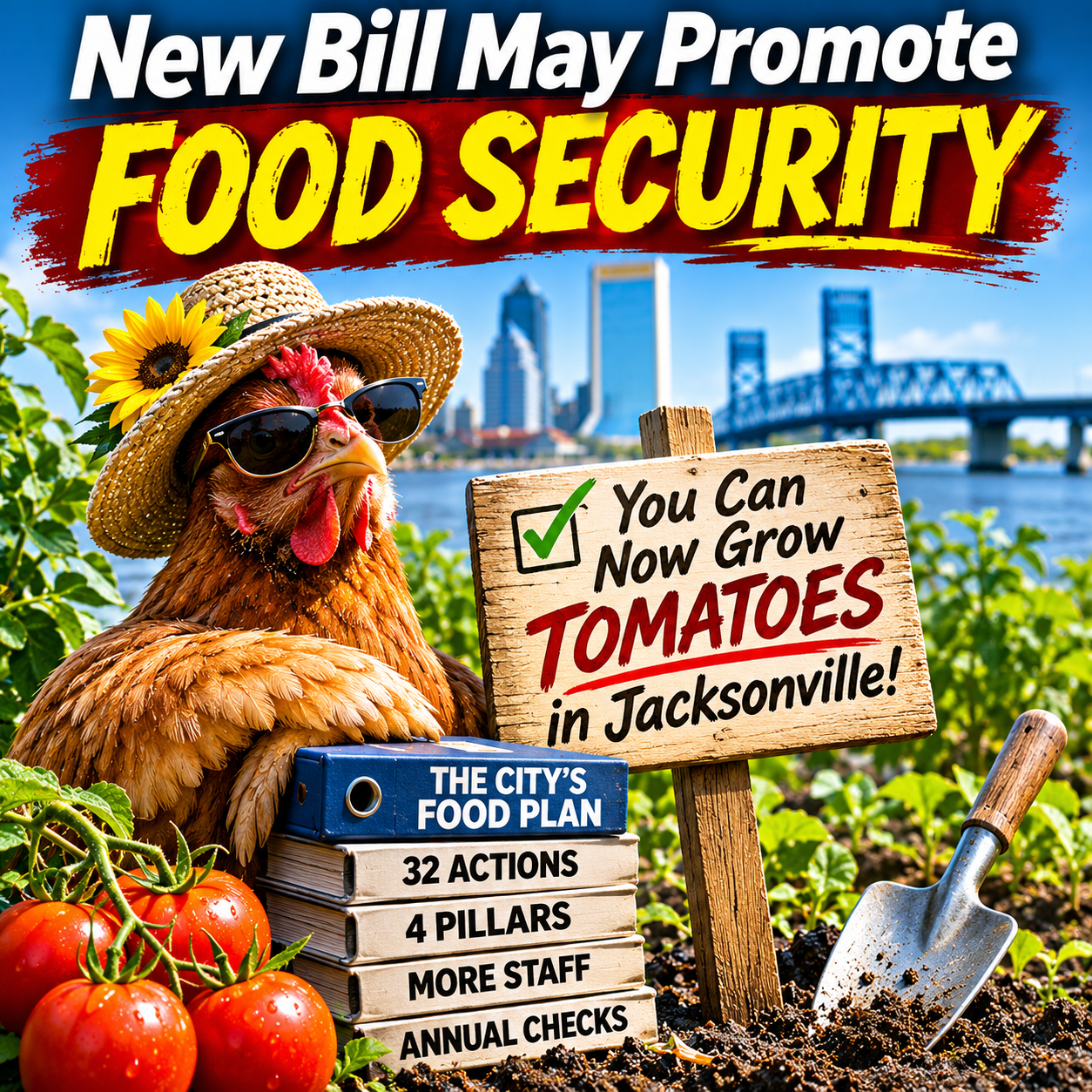
The Bold New City of the South, as Jacksonville once was called, took another bold move this week by allowing people to grow tomatoes in their back yards.
Mayor Donna Deegan, Democrat, was thrilled. She said:
“As Jacksonville continues to grow and grocery costs rise, food matters more than ever. We recently launched the Jacksonville Food Plan to chart a clear, informed path forward for this city priority. One of its components is the Pathways to Urban Agriculture Act, which passed the City Council tonight. This bill will strengthen urban farming, increase access to food, and create more opportunities for local growers to sell their products. I’m grateful to our colleagues on the Council, in particular co-introducers Peluso and Arias, as well as many community leaders for their collaboration on this important legislation. Together, we are creating a future that is healthier, sustainable and more affordable.”
There is nothing wrong with the bill. It passed City Council unanimously. The fact that it was needed only shows, again, that the city is over-regulated.
But it also fits neatly into the urban fairy tales that liberals live by.
In the left-wing world there are “food deserts,” “heat islands” and all manner of threats to the public that only bigger and more expensive government can solve.
Presumably to help solve the food desert problem, the city is going to pay a grocery chain to build a grocery downtown.
Deegan has alleged that thousands of Jacksonville residents suffer from “food insecurity.” I see a lot more obese people than skinny people so maybe it is a matter of perception.
You probably would not be surprised to find that the city government has a “food plan.”
I confess I couldn’t wade through all the verbiage, but I asked an AI bot to summarize the administration’s strategy to prevent mass famine in the city.
It said: “Jacksonville’s first comprehensive Food Plan (October 2026) was created because nearly 1 in 7 residents face food insecurity, food costs are rising, and recent disruptions (COVID-19, outbreaks, storms) exposed weaknesses in the local food system. As the city grows, leaders want to treat food access as essential infrastructure—alongside roads and housing—to improve health, economic opportunity, neighborhood stability, and resilience.
“The plan organizes work around four pillars—Production, Distribution, Access, and Recovery—and lays out 32 practical actions the city can lead or influence. These include clarifying rules to support urban farming and community gardens, expanding markets and training for local producers, strengthening supply-chain resilience and emergency response, making healthy food more affordable and reachable (especially in low-access neighborhoods), boosting the culinary economy, and cutting food waste through better recovery, donation, and composting programs. Success depends on ongoing partnerships across government, businesses, nonprofits, and residents, with dedicated staff oversight, annual progress checks, and a shared resource hub.”
If that sounds like the local government hopes to form communes in the city, don’t be alarmed. I’m sure it is a misperception.
With the new bill adopted this week, people who are insecure, or just enjoy gardening, can now grow their own rutabagas without fear of having a SWAT team descend upon them.
Thus, a bill resulting in less government is a blessing, timely for the day we celebrate the founding of a new, free colony in America and the successful effort by the settlers to overcome real food insecurity.
Happy Thanksgiving.