Yesterday, Politico reported another record-setting Trump 2.0 initiative, which Congress passed into law in last year’s One Big Beautiful Bill, and has now been unveiled a month before the midterms:

This one hits on all political cylinders. Tax credits are the holy grail of tax policy. They reduce taxpayers’ tax liabilities dollar-for-dollar, so they let taxpayers literally move money away from the IRS and into whatever the target is. In other words, it cuts taxes by letting people voluntarily use their own money for something they prefer, removing the government middleman, a notion that is both mind-blowing and terrifying for Democrats.
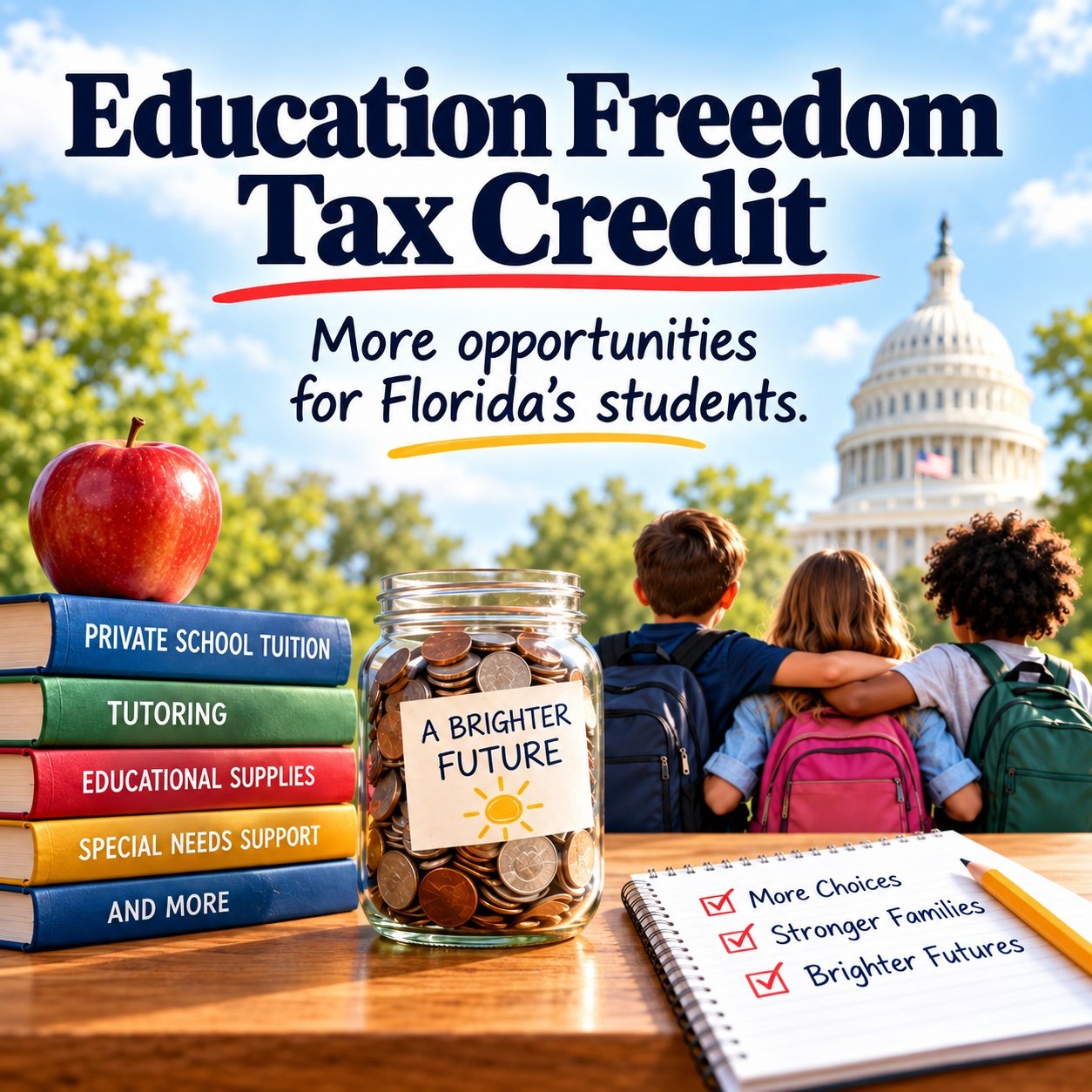
Not only that, but it’s a school choice program. The new Treasury rules let taxpayers donate money to private schools of their choice— up to $1,700 individually, or $3,400 per married couple. It cannot be directed to any particular student; it must go to a designated private school scholarship nonprofit, with at least 90% of the money spent on scholarships and tutoring, and a maximum of 10% for overhead.
Thus, it diverts federal tax revenues to not the public schools. And it lets citizens decide where the money goes, not bureaucrats or politicians. The money goes straight to the schools without any skimming by program administrators or NGOs. It is for scholarships, which will help more students escape failing public schools.
Nothing like this has ever happened before.
“The Education Freedom Tax Credit marks a new chapter in educational freedom and opportunity by establishing America’s first nationwide school choice program and empowering states to give students and families more options,” Treasury Secretary Scott Bessent said in a statement.

Democrats were outraged. They have already filed a bill to repeal the tax credit. (It’s going nowhere.) Here is more of what you can look forward to if you vote blue next month.
They sneeringly called the tax credit a “school voucher program.” Teachers Union President Randi Weingarten complained bitterly: “For every precious public dollar funneled to private schools under this scheme—money that could be spent on instruction, lowering class sizes, modern buildings or new books in the library—public school parents will be hunting for stray pennies on the floor,” she fussed.
Even better, state governors are required to opt-in to the program. In other words, President Trump is making them say they want it. “State governors should reject it,” Weingarten snapped. So far, thirty states have already signed on, leaving twenty blue states on the fence. “Thursday’s announcement will likely increase the pressure on blue-state governors,” Politico noted drily. You think?
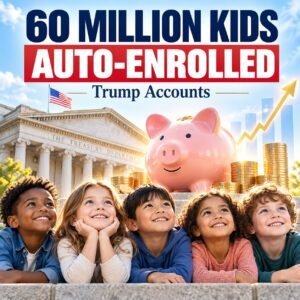
So far this week —the news nearly invisible in corporate media— a million Obamacare suckers got $500 back along with a nice letter from the President. Parents got automatic Trump Accounts for their kids, plus a new tax credit helping build out the nation’s private school system— and reducing their taxes. At a campaign rally yesterday, President Trump doubled down on his pledge to send American adults a tariff dividend of $5,000 each, assuming, that is, Republicans keep Congress.
He’s not saying that the $5,000 is buying anybody’s vote. He’s saying Congress won’t pass it if Democrats are in charge. Nobody’s arguing with that logic.
Rather, experts have just declared the whole dividend plan to be impossible, setting up an Old West-style showdown after the midterms should Republicans prevail. It does seem like a heavy lift. “This is approximately $1 trillion,” the President admitted, “but we have a record-setting $21 trillion that’s coming in through investors. I never fail people. I always come through,” he promised.
Where will the dividend money come from? Who’ll Trump convince to pay for it this time? I can’t wait to find out.