Here we go again.
Florida is finally having a serious conversation about meaningful property-tax relief, and immediately the warnings begin.
Police will suffer. Firefighters will suffer. Roads will suffer. Parks and libraries will suffer.
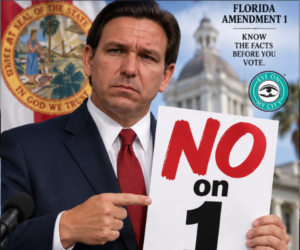
Now the Jacksonville Civic Council, a group made up of many of the Jacksonville’s prominent business and civic leaders, has joined those opposing Amendment 3, warning that local governments could lose billions in future property-tax revenue.
That matters because the Civic Council has influence. Its members are successful people who understand budgets, business pressures, payrolls and the hard choices that come when expenses rise faster than revenue.
Which is exactly why I wish they were asking a different question.
Why do we always start with what the taxpayer will lose?
Why don’t we start by asking government what it can live without?
Every family knows what happens when the household budget gets tight.
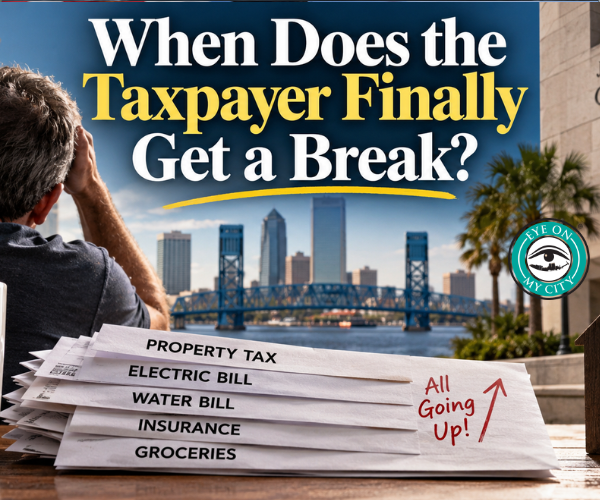
The electric bill goes up. Insurance goes up. Groceries go up. Property taxes go up.
So families adjust.
They postpone the vacation. Keep the car another year. Cancel a subscription. Delay a remodeling project.
They separate needs from wants.
Government should have to do the same thing.
Jacksonville’s proposed FY 2026–27 budget expects about $1.29 billion in property-tax revenue — roughly 6% more than the previous year, driven largely by rising property values and new construction.
Government sees increasing revenue.
The homeowner sees increasing bills.
That difference matters.
No one wants fewer police officers or longer fire-rescue response times. Those are essential services and they should be protected.
So start there.
Fund police.
Fund fire and rescue.
Fund roads, drainage and other basic infrastructure.
Then look at everything else.
Jacksonville spends millions through grants to nonprofit organizations. Millions more go to cultural programs. The city undertakes large capital projects, builds public amenities and participates in major development and entertainment projects.
Some of those things may be worthwhile.
But worthwhile is not the same as essential.
And before taxpayers are told that relief will mean fewer cops or firefighters, government should first be required to examine the nice-to-haves before touching the must-haves.
That is what businesses do.
That is what families do.
And ironically, the Jacksonville Civic Council is filled with successful businesspeople who understand that better than most.
They know what happens when revenue projections change.
You protect the mission. You find efficiencies. You eliminate duplication. You delay lower-priority projects. You review staffing and contracts.
You make choices.
You don’t simply send the customer another bill.
So instead of asking why property-tax relief can’t work, I’d like to hear more people asking:
How can we make it work while protecting essential services?
There are legitimate questions about the financial impact of Amendment 3. Those questions deserve answers.
But government revenue is only half of the equation.
The other half is the person earning the money.
The worker.
The family.
The retiree trying to stay in the home they spent decades paying for.
The small-business owner watching every expense climb.
Maybe it is time to stop asking only what government needs.
Maybe we should also ask what the taxpayer needs.
And perhaps the most important question of all:
When does the person paying the bill finally get a break?
Because maybe, just once, the answer shouldn’t be:
“Give government more.”
Maybe it should be:
“Government, figure out how to do more with what you’ve got.”